What Time Does to a Masterpiece: The Diverging Fates of Great Films and Great Wines

Photo by Photo by Myriam Zilles on Unsplash on Unsplash
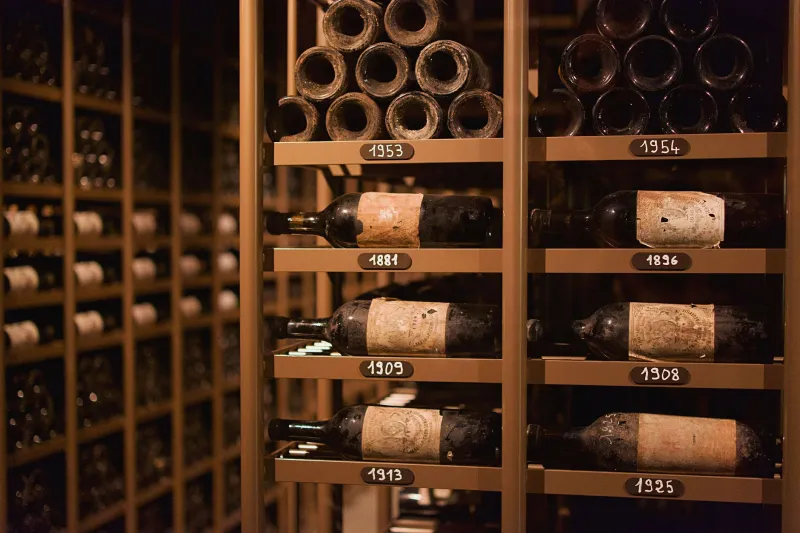
A fine Burgundy deepens with each passing decade, its tannins softening into something approaching transcendence. Yet a cinematic masterpiece from the same era may grow either more luminous or more opaque depending on forces entirely outside the winemaker's—or director's—control. This is the vintage problem: the unsettling truth that time treats art and craft by entirely different rules.
Wine and cinema share a foundational mythology. Both are products of place, season, and human intention. Both reward patience. Both accumulate meaning the longer they are contemplated. And yet the analogy, seductive as it is, begins to fracture the moment you ask a simple question: does a great film actually age, or does it merely endure?
The Chemistry of Preservation
When a winemaker seals a bottle, she is initiating a controlled transformation. Oxygen, phenols, and acids negotiate in the dark over years and decades, producing complexity that could not have existed at the moment of harvest. The wine is genuinely different at thirty years than it was at three. It has become something new.
Cinema operates under no such chemistry. A print of Vertigo struck in 1958 contains exactly the same frames today as it did when it first unsettled audiences at the Palace Theatre in San Francisco. The photons are identical. The editing rhythm has not shifted. What changes, then, is not the film itself but the audience arriving to meet it—and the cultural sediment that has accumulated between the work and its viewer.
This distinction matters enormously. When we say a wine has aged well, we are describing an internal evolution. When we say a film has aged well, we are describing an external negotiation between a fixed object and a moving world.
The Paradox of Relevance
Consider two American films released within a decade of each other: Chinatown (1974) and Network (1976). Both were celebrated as masterworks upon release. Both addressed the corruption embedded in powerful American institutions. Yet their trajectories through time have diverged in instructive ways.
Network, with its prophet-of-doom television anchor and its corporate board rooms trading in human misery, has grown almost unbearably prescient—its satire sharpened rather than dulled by the media landscape that followed. Chinatown, equally brilliant in its craft, carries a biographical asterisk that now shadows every screening, a reminder that the circumstances of creation cannot always be cleanly separated from the work itself.
Neither film has changed. The world around them has. A sommelier might recognize this phenomenon: two bottles from the same château, the same vintage, stored under identical conditions, can present entirely differently at the table. The wine's history outside the cellar—how it was transported, who has held it, what story surrounds it—shapes the experience of drinking it in ways that have nothing to do with the liquid itself.
When Technique Becomes Period Furniture
There is a second dimension to cinematic aging that has no true parallel in viticulture: the problem of technique becoming visible as technique.
A viewer watching a thriller from the early 1980s may find herself distracted by editing rhythms that once felt propulsive but now register as slightly mechanical, or by optical effects that once conveyed menace but now announce their own construction. The craft has not degraded. It has simply been contextualized by everything that came after it—by the grammar shifts that subsequent filmmakers introduced, often in direct response to those earlier works.
Wine, by contrast, does not become aware of later vintages. A 1982 Pétrus does not know that 2000 Pétrus exists. It cannot be made self-conscious by its successors. A film from 1982, however, exists in permanent conversation with everything made since, and audiences bring that entire conversation into the theater with them.
This is what film historians sometimes call the sedimentation problem: the accumulation of cinematic history around a work can either illuminate it or bury it, and there is no reliable method for predicting which will occur.
The Director's Vision and the Question of Maturation
Can a director's vision truly mature the way a winemaker's does? The question is more complicated than it first appears.
A winemaker working the same vineyard across multiple decades accumulates knowledge that feeds directly back into the wine. She adjusts canopy management, harvest timing, extraction. The terroir remains constant; her understanding of it deepens. The result is that late-career vintages from a great estate often carry a quality of hard-won clarity—less exuberant than early releases, more precisely expressive.
Some directors follow an analogous arc. The late films of Agnès Varda, or the final works of Akira Kurosawa, carry a quality of distillation—a reduction of cinema to its most essential gestures—that feels genuinely analogous to a great winemaker's mature style. These films did not simply endure; they arrived, in some meaningful sense, at what they were always trying to become.
But the analogy holds only partially. A winemaker cannot revise a bottle once it is sealed. Directors can—and increasingly do—return to their work, issuing director's cuts, restorations, and re-edits that alter the original release in ways no vintner could replicate. When Ridley Scott revisited Blade Runner across multiple versions, was he maturing a vintage or simply opening the barrel too soon and blending it differently? The answer shapes how we understand the relationship between a director's intention and a film's identity across time.
Drinking the Moment, Watching the Distance
Perhaps the most honest conclusion is that wine and cinema age according to fundamentally different logics, and that the most interesting question is not which ages better but what each form of aging reveals about the nature of the medium.
Wine ages from within. Its transformation is biological, chemical, intimate. To drink an old bottle is to encounter something that has genuinely lived its years in the dark, accumulating experience in a way that has no metaphorical quality about it—it is literal transformation.
Cinema ages from without. Its transformation is cultural, contextual, relational. To watch an old film is to encounter something that has remained perfectly still while the world has moved around it—and to discover, in the gap between the film's stillness and the world's motion, everything that time has chosen to illuminate or obscure.
Both experiences require a kind of surrender. The wine drinker must set aside her preference for younger fruit and allow the bottle to present itself on its own terms. The film viewer must quiet the noise of contemporary expectation and permit the work to speak in its original register.
In both cases, what you find when you truly pay attention is not simply the object before you, but a precise record of a moment—a harvest, a production, a singular confluence of conditions that will never be exactly repeated. The vintage problem, in the end, may not be a problem at all. It may simply be the price of admission to something that time has made irreplaceable.