Opened and Unchanging: On Why Cinema Outlasts the Bottle
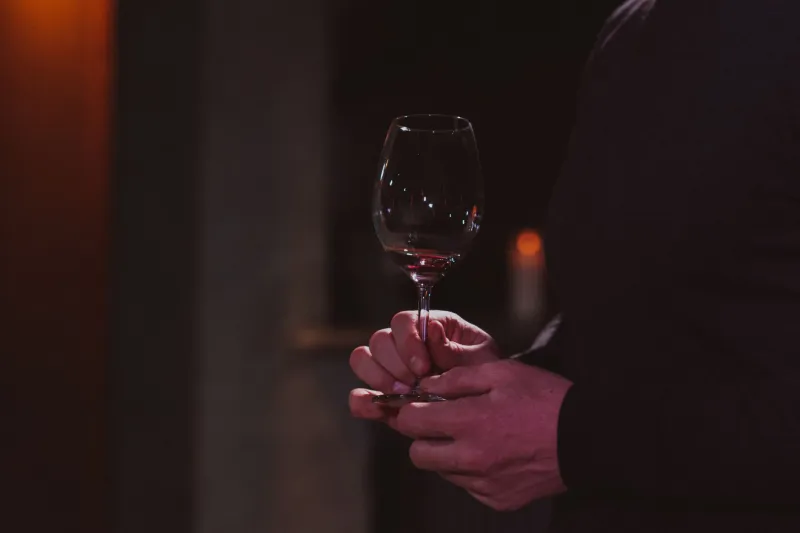
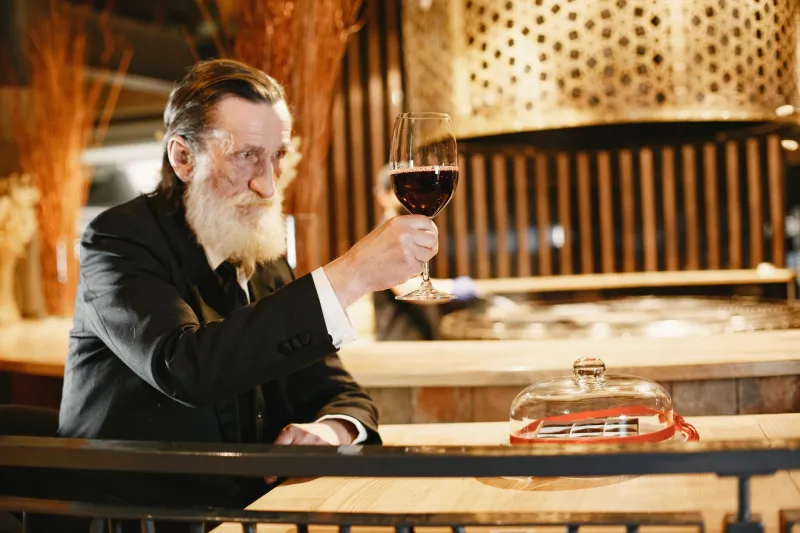
There is a moment familiar to any serious wine collector: the cork is drawn, the pour is made, and what fills the glass is not triumph but elegy. The wine—perhaps a celebrated Burgundy from a storied vintage, held for decades in careful darkness—has passed its peak. It is not ruined, exactly. But it is diminished. Time, that supposed ally of great wine, has quietly become its executor.
Now consider a different kind of reckoning. A viewer returns to a film she first encountered in her twenties—Andrei Tarkovsky's The Mirror, say, or John Cassavetes' A Woman Under the Influence—and finds it not merely as good as she remembered but somehow larger, more morally complex, more alive to her current self than it was to the person she used to be. The film has not changed. She has. And yet the encounter feels like discovery.
These two experiences illuminate one of the more quietly profound divergences between wine and cinema: their fundamentally different relationships with time.
The Myth of the Immortal Vintage
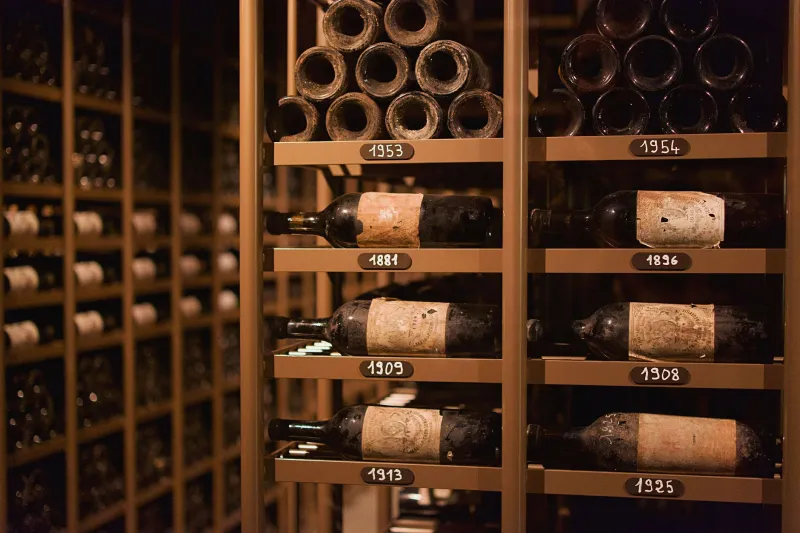
Wine culture is saturated with the language of permanence. A great vintage is described as something that will "last a century," that possesses "extraordinary aging potential," that rewards patience with transcendence. And there is genuine truth embedded in this mythology—certain bottles do evolve into something remarkable over years of careful cellaring. But the key word is evolve, which implies both gain and loss, both arrival and departure.
"Every wine has a window," says Elena Vargas, a winemaker based in Sonoma County who has spent three decades studying the chemistry of aging in red wine. "Even the most structured Cabernet, even a wine with the kind of tannins that feel like they'll never resolve—there is a moment when it peaks, and then a moment when it begins to recede. We can extend that window, but we cannot eliminate it. The bottle is always moving toward its end."
This is not pessimism. It is biology, chemistry, physics. Once oxygen enters the equation—whether through the slow transmission of a cork or the sudden exposure of an opened bottle—the wine's transformation accelerates. What was once a process measured in decades compresses into hours. The clock, already ticking, begins to sprint.
Film archivists understand a related but distinct version of this anxiety. Nitrate film stock, used throughout Hollywood's early decades, was notoriously unstable—flammable, prone to decomposition, capable of destroying itself in storage. Countless films from the silent era and early sound period have been lost entirely, not to critical neglect but to the sheer physical fragility of the medium. The Library of Congress estimates that roughly seventy percent of all silent films are gone forever.
"We think of film as permanent," says Marcus Holden, a preservation specialist at a major American film archive who has spent his career working to stabilize deteriorating prints. "But the original materials are extraordinarily vulnerable. What we're really doing, in preservation work, is creating the conditions for a kind of artificial stability—buying time, in a sense, for something that would otherwise be lost."
Where the Analogy Breaks Down
And yet here is where the wine-and-film comparison, so seductive in its symmetry, begins to fracture in instructive ways.
A wine, once opened, cannot be returned to stasis. The chemical processes set in motion by exposure are irreversible. You may slow oxidation with a vacuum stopper or a gas-flush system, but you cannot undo what has already occurred. The wine's trajectory, from the moment of uncorking, is singular and terminal.
A film, by contrast, exists in a condition of potential rather than process. The print—or increasingly, the digital file—does not experience being watched. It does not age in the act of being seen. Every screening is, in a meaningful sense, the film's first screening, because the film itself is unchanged by the encounter. What changes is the viewer.
This distinction carries significant philosophical weight. When critics speak of a film "aging badly," they are almost always describing a cultural or perceptual shift—a change in the audience's relationship to certain representations, certain assumptions, certain aesthetic conventions—rather than any deterioration in the work itself. The film of 1955 is still, in its essential form, the film of 1955. Its relationship to the present is what has altered.
Wine does not have the luxury of this separation. The 1961 Pétrus in your cellar is not the same wine it was in 1975, or in 1990, or in 2010. It has been changing continuously, invisibly, in ways that no act of perception can reverse. The viewer's relationship to a film can be renewed. The drinker's relationship to a bottle can only be concluded.
Repeated Viewing as a Form of Vintage
What the finest films offer, then, is something wine cannot: the possibility of genuine renewal through return. A viewer who encounters Chinatown at twenty-two and again at forty-five is not watching a degraded version of the film she first saw. She is watching the same film through a consciousness that has accumulated experience, loss, and understanding in the intervening years. The film meets her where she is.
This is why serious film culture has always placed such emphasis on repeated viewing—not as nostalgia, but as a legitimate critical and experiential practice. Each return to a great film is a form of conversation, one in which the film's terms remain constant while the viewer's capacity to receive them expands or shifts.
"There are films I've watched fifteen, twenty times," says Claire Sato, a film studies professor at a university in the Pacific Northwest who specializes in the phenomenology of spectatorship. "And I would not say I've seen the same film each time. What I've seen is my own changing relationship to something that remains, in itself, completely stable. That stability is the gift. It's what makes return possible."
Winemakers, for their part, tend to regard this capacity with something approaching envy. "We make something that is alive," Vargas reflects, "but that aliveness is also its vulnerability. I sometimes think about what it would mean to make something that could be experienced the same way a hundred years from now. Wine can't offer that. The best we can do is give someone a window."
On the Question of Timelessness
Neither medium is truly timeless, of course. Films carry the marks of their historical moment in every frame—in the assumptions embedded in their narratives, in the technologies used to capture and present them, in the cultural contexts that shaped their reception. To call any film timeless is to ignore the conditions of its making.
But cinema does offer something that approaches the experience of timelessness in a way that wine, by its very nature, cannot. The film can be revisited. The bottle cannot be reopened without consequence. And in that difference lies something worth dwelling on—a quiet argument for the particular kind of permanence that moving images, at their finest, can achieve.
The vintage problem, in the end, is not a problem for cinema. It is wine's problem alone: the burden of a beauty that must, eventually, be consumed in order to be known, and that diminishes in the very act of being encountered. Film asks nothing of the kind. It waits, patient and unchanged, for the viewer to return.