Trained to See: What a Sommelier's Discipline Reveals About the Art of Watching Film
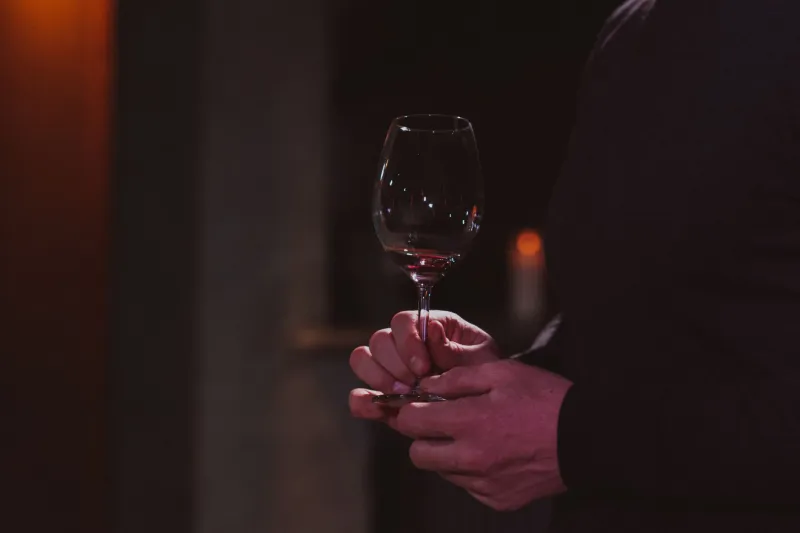
There is a particular kind of attention that wine professionals develop over years of practice—a slow, deliberate, almost meditative engagement with what is in front of them. They learn to resist the impulse to consume quickly, to withhold judgment until the full picture has revealed itself, and to trust that meaning accumulates in layers rather than arriving all at once. It is, when described that way, a remarkably good education for watching serious cinema.
The question worth asking is whether that education actually transfers. Does the discipline of the cellar sharpen the eye in the theater? And if it does, what does a film look like when viewed through a palate trained to find complexity in subtlety?
The Color in the Glass, the Color on the Screen
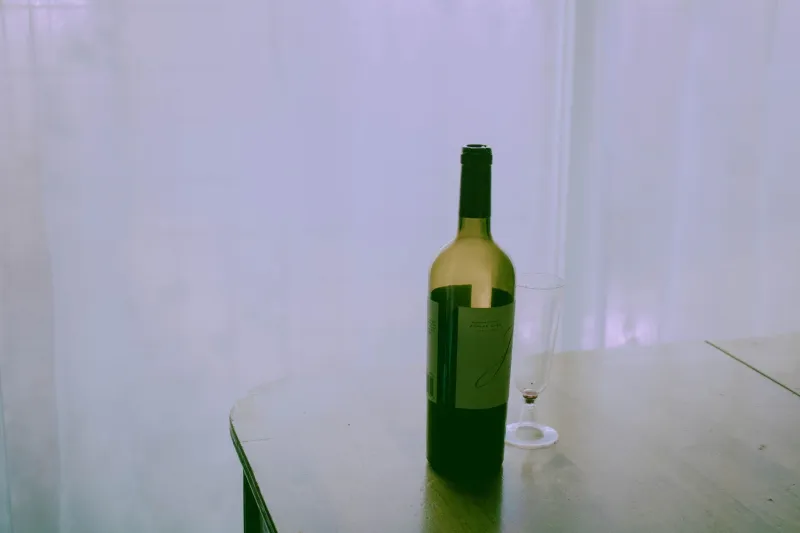
For a working sommelier, color is never decorative. The amber edge of an aging white wine, the blue-tinged violet of a young Syrah—these are diagnostic tools, the first data points in a larger interpretive exercise. Color carries information, and learning to read it is one of the foundational skills of the profession.
It should come as little surprise, then, that wine professionals tend to engage with a film's color grading with unusual intensity. Where a general audience might absorb tone atmospherically, a trained taster often reads it analytically. The desaturated palette of a grief narrative, the warm amber wash of a period drama, the clinical cool of a psychological thriller—these choices register not merely as mood, but as argument.
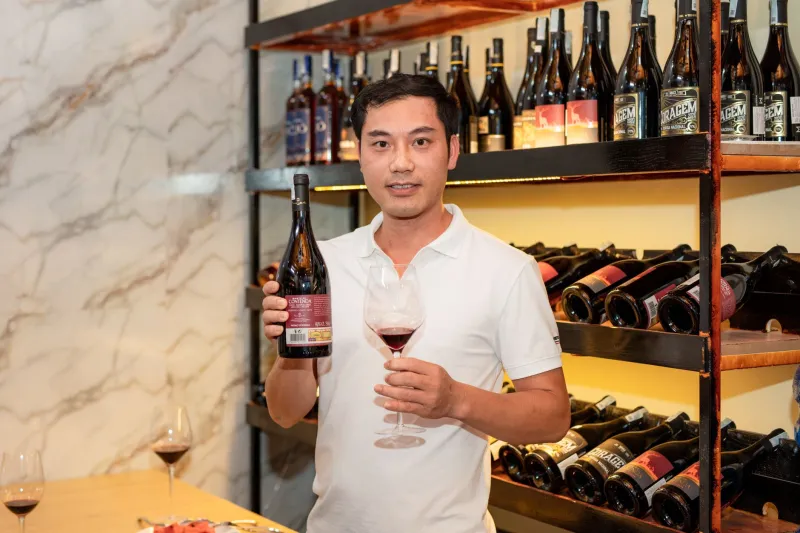
Marcella Voss, a Master Sommelier based in San Francisco who moonlights as a devoted cinephile, describes the connection plainly: "When I watch a film, I'm always asking what the color is telling me that the dialogue isn't. It's the same instinct I bring to a glass. The surface is never just the surface."
This kind of double vision—attending simultaneously to what is shown and what is implied—is precisely the discipline that serious wine evaluation demands. A wine that presents beautifully but falls apart on the finish is not a great wine. A film that dazzles visually but collapses under narrative scrutiny is not a great film. The evaluative framework, it turns out, is nearly identical.
Restraint as Vocabulary
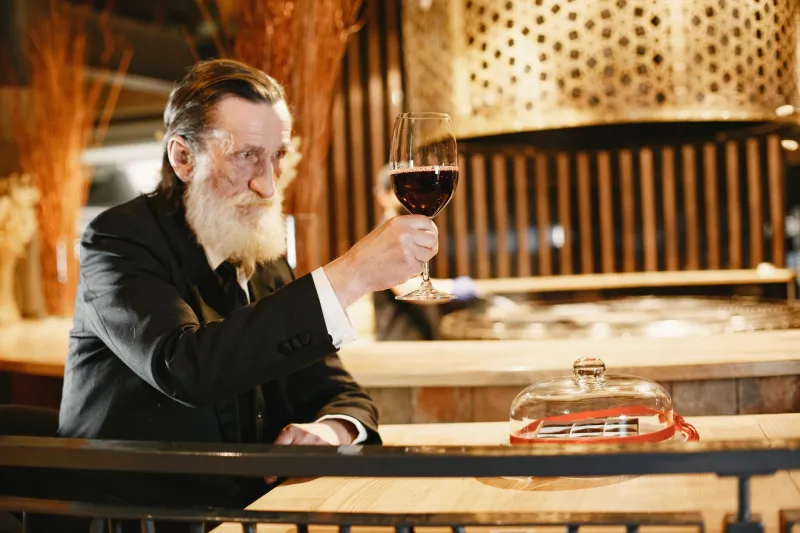
One of the more counterintuitive lessons of advanced wine education is that restraint is often a marker of quality rather than a deficit. The most memorable bottles are frequently those that withhold, that allow the taster to come to them rather than projecting loudly across the room. Oak that overwhelms, fruit that shouts, alcohol that burns—these are not virtues. They are failures of balance.
Sommeliers who are serious film-watchers tend to apply this same calculus to storytelling. They are drawn, almost invariably, to directors who trust the audience—filmmakers like Kelly Reichardt, whose long silences carry enormous weight, or Barry Jenkins, whose restraint in framing emotional climaxes makes those moments exponentially more devastating when they finally arrive.
Daniel Okafor, a winemaker from Oregon's Willamette Valley who spent a decade studying film before pivoting to viticulture, frames it this way: "Overworked wine and overworked cinema have the same problem. They're trying to tell you how to feel rather than letting you discover it yourself. The best bottles, like the best films, leave room for you inside them."
This tolerance for ambiguity—even a preference for it—is something wine training actively cultivates. A professional taster learns to sit with uncertainty, to resist the urge to resolve a wine into a simple verdict before it has had time to breathe. That same patience, applied to cinema, produces a viewer who can hold a film's contradictions without demanding that they be tidied away.
Reading Metaphor Like a Label
Wine has always been a language of metaphor. The vocabulary of tasting notes—earth, graphite, violets, tobacco, wet stone—is a system of translation, a set of analogies designed to make the ineffable communicable. Professionals spend years expanding and refining this vocabulary, learning to reach for the precise image rather than the approximate one.
That habit of metaphorical precision, several industry figures suggest, makes them unusually attentive to the symbolic architecture of film. Where a casual viewer might experience a repeated image as atmospheric texture, a trained taster tends to interrogate it: What is this standing in for? What is it doing here that could not be accomplished through dialogue alone?
Voss recalls watching Terrence Malick's The Tree of Life with a group of fellow sommeliers and being struck by how differently the conversation unfolded compared to discussions she had with non-industry friends. "We spent an hour talking about water—what it meant, why it kept returning, how its quality changed across the film. That's a tasting note conversation. We were parsing imagery the way we'd parse a finish."
The analogy extends further. Just as a skilled taster can identify the influence of terroir—the specific combination of soil, climate, and place that shapes a wine's character—a wine-trained viewer often becomes adept at reading the cultural and geographical DNA embedded in a film's visual language. The way light falls in a Taiwanese drama versus a Mexican one. The specific quality of silence in a Scandinavian film. These are, in a meaningful sense, expressions of cinematic terroir.
The Long Finish
Perhaps the most significant gift that wine training offers the cinephile is a recalibrated relationship with time. Tasting, at its most serious, is not a quick exercise. It requires waiting—for the wine to open, for the nose to develop, for the finish to play out fully before rendering judgment. Rushing that process produces shallow conclusions.
The same principle applies to cinema, and wine professionals who have internalized it tend to be more comfortable with films that demand patience. They are less likely to check their phones during a slow second act, more willing to trust that a director's apparent digression will eventually resolve into meaning. They have been trained, in other words, to believe that the best things take time.
Okafor puts it simply: "A great Pinot Noir from our valley doesn't give you everything in the first sip. Neither does a great film in its first twenty minutes. You have to stay with it. That's not a flaw—that's the invitation."
The discipline of wine, it turns out, is not merely a preparation for understanding what is in the glass. For those who carry it into the darkened theater, it becomes a way of seeing—attentive, patient, and alert to the possibility that the most important things are always arriving just beneath the surface.