Tasting Notes for the Silver Screen: How Sommeliers Are Redefining Film Criticism
There is a moment, familiar to any serious wine professional, when a glass reveals itself in stages — the initial impression giving way to a middle register of complexity, and finally a finish that lingers long after the last sip. It is a structured, almost architectural experience. Increasingly, a cohort of sommeliers and wine educators across the United States is arguing, quite persuasively, that great cinema operates by precisely the same logic.
The crossover between wine expertise and film criticism may seem, at first glance, like an improbable pairing. Yet the intellectual infrastructure that sommeliers bring to their craft — a trained attention to structure, balance, provenance, and emotional resonance — translates with surprising elegance into the language of cinematic analysis. What is emerging is not a gimmick but a legitimate critical framework, one that is quietly reshaping how sophisticated American audiences engage with both art forms simultaneously.
The Vocabulary of Terroir, Applied to the Screen
Consider how a Master Sommelier might describe a wine from the Willamette Valley: cool-climate restraint, mineral tension on the mid-palate, a finish that rewards patience. Now consider how the same professional might describe Kelly Reichardt's Certain Women, shot in Montana but carrying the temperamental DNA of the Pacific Northwest — spare, unhurried, deeply rooted in place. The parallel is not forced. Both experiences demand the same quality of attention, the same willingness to resist the immediate and sit with ambiguity.
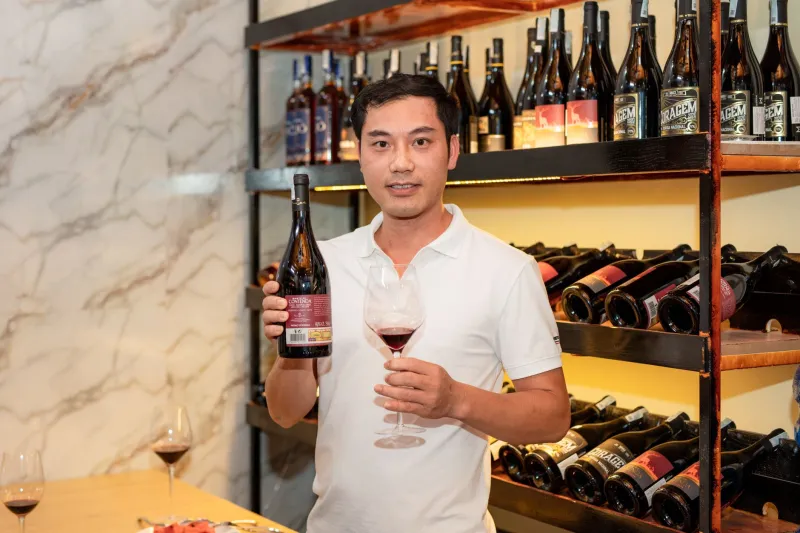
This is the thesis that professionals like Elena Vargas, a Certified Sommelier and film programmer based in Portland, Oregon, have been developing in public forums and private tastings alike. Vargas, who curates a monthly series called Vintage Frames at a Southeast Portland venue, pairs each film screening with a flight of wines chosen to mirror the movie's tonal and structural qualities. A brooding Nebbiolo from a Willamette producer accompanies a screening of a slow-cinema European title; a bright, high-acid Albariño from a Central Coast importer precedes a Spanish documentary about generational fishing communities.
"The pairing is never decorative," Vargas explains. "I'm asking the audience to use the wine as a key. If the wine is teaching you to notice texture and restraint, you carry that sensibility into the film. The two experiences calibrate each other."
Precision as a Critical Tool
What distinguishes sommelier-critics from their counterparts in traditional film journalism is, in part, the precision of their descriptive apparatus. Wine education trains professionals to disaggregate experience — to isolate acidity from tannin, fruit expression from oak influence — and then reassemble those components into a coherent whole. Applied to cinema, this methodology encourages a similarly granular engagement with cinematography, sound design, pacing, and performance as distinct but interdependent registers.
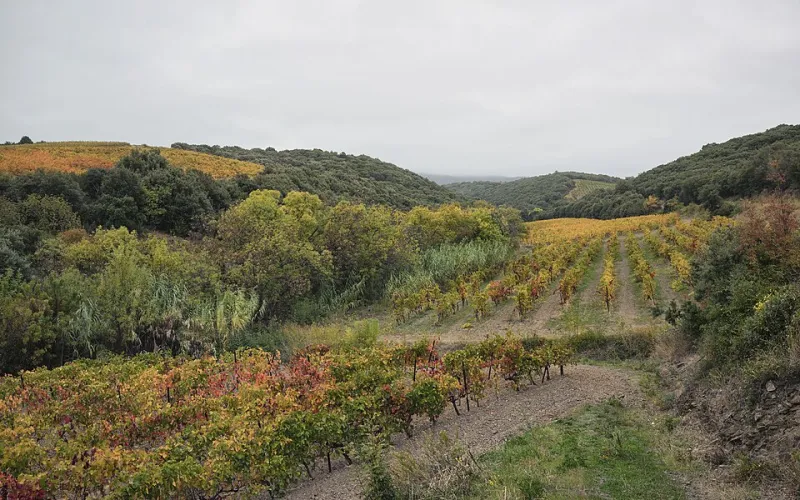
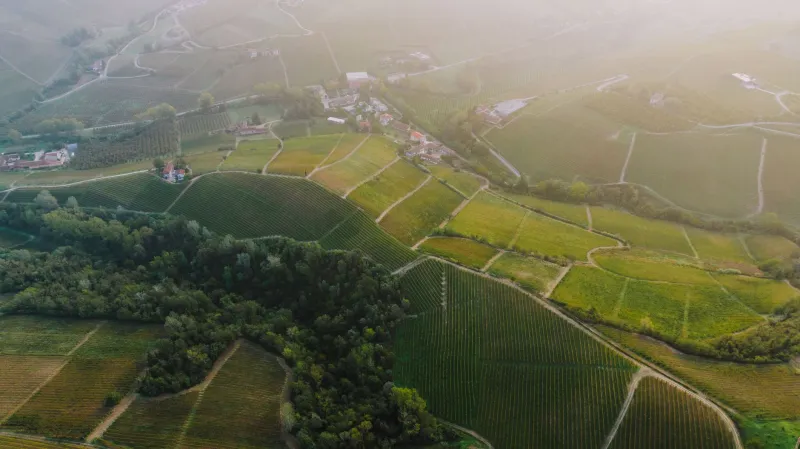
Marco Delacroix, a former advanced sommelier who now writes a widely-read column on food, wine, and cinema for a regional arts publication in San Francisco, describes this as "reading the frame the way you read a label." His reviews frequently invoke the concept of terroir — not metaphorically, but as a genuine analytical category. Where was this film made? What does the landscape contribute to its emotional grammar? How do the material conditions of its production shape what it is able to say?
"Hollywood films often taste like industrial wine," Delacroix says, without particular malice. "Technically correct, broadly appealing, but without a sense of origin. The films I find most compelling have terroir. You could not have made them anywhere else, with anyone else, at any other moment."
Festival Culture and the Curated Experience
Beyond individual critics and programmers, the sommelier-as-film-curator phenomenon is finding institutional expression in a growing number of wine-focused film festivals and experiential events. The Vine & Vision gathering held annually in Napa Valley invites wine educators to serve as jury members alongside traditional film critics, evaluating short documentaries about global wine culture. Organizers report that the presence of wine professionals on the jury has measurably shifted the conversation — introducing criteria around authenticity of place, narrative terroir, and the integrity of the relationship between filmmaker and subject.
Similarly, the Crush Screen series, which debuted in Austin, Texas, in 2022 and has since expanded to Chicago and New York, was conceived by a team that includes two certified sommeliers. Their programming philosophy explicitly borrows from the world of natural wine: a preference for films that are unfiltered, site-specific, and made with minimal intervention from commercial imperatives.
The audience response has been notable. Attendees at these events frequently describe the combined experience as more immersive and intellectually satisfying than either a standard film screening or a conventional tasting. The cross-pollination, it appears, is generative for both art forms.
A New Critical Lexicon
Not everyone in traditional film criticism is enthusiastic about this development. Some argue that importing wine terminology into cinema analysis risks aestheticizing the medium in ways that obscure its political and social dimensions. A film about labor, migration, or systemic inequality, this argument runs, is not well-served by being described as having "good structure and a long finish."
It is a fair caution. The most thoughtful sommelier-critics are aware of it. Vargas, for her part, is careful to distinguish between using wine as a sensory bridge — a way of priming attention and deepening presence — and reducing a complex film to the terms of a tasting note. "The wine opens a door," she says. "What you find on the other side is still the film's responsibility."
What seems beyond dispute is that the sensory rigor and cultural seriousness that the best wine professionals bring to their work constitute a genuine contribution to the broader project of film criticism. In an era when algorithmic recommendations have flattened the experience of discovering cinema, the sommelier's eye — trained to find the particular within the general, the place within the product — offers something genuinely valuable: a way of watching that is also, in the deepest sense, a way of tasting.