Soil and Story: How Visionary Directors Transform Wine Regions into Living Characters
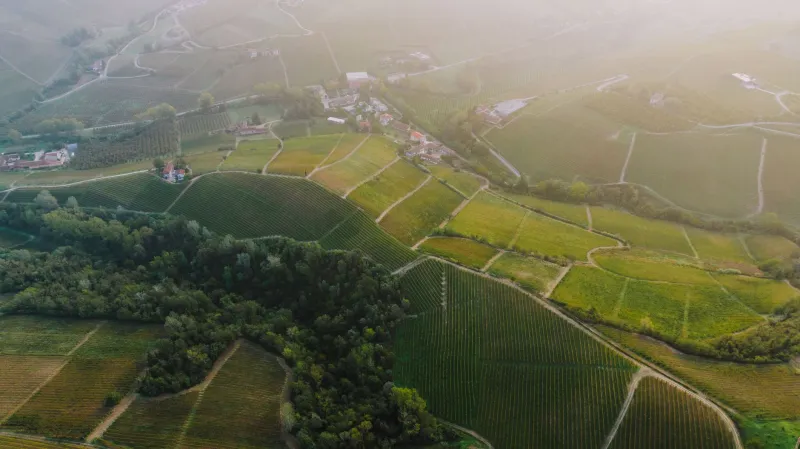
The greatest filmmakers understand that a landscape is never merely scenery. From the sun-scorched slopes of Rioja to the fog-laced valleys of Burgundy, a growing number of auteurs have discovered that wine country carries a narrative weight all its own—one rooted in geology, memory, and the slow accumulation of human struggle. To place a character within a wine-growing region is not simply to offer them a picturesque address. It is to subject them to the same forces that shape the vine itself: climate, pressure, time, and the particular chemistry of the earth beneath their feet.
This is the cinema of terroir—a mode of storytelling in which the land does not merely host the narrative but actively participates in it.
What Terroir Means Beyond the Bottle
For American audiences accustomed to hearing the word terroir on sommelier menus or in the tasting notes of Napa Valley Cabernets, the concept may seem firmly rooted in enology. Yet its implications extend far beyond wine. At its most elemental, terroir describes the totality of environmental conditions—soil composition, elevation, drainage, microclimate, and human tradition—that give a place its irreducible character. No two parcels of land are identical, and that specificity is precisely what makes terroir so compelling as a cinematic device.
When a director chooses to set a film in a wine region, they are, consciously or not, inheriting all of that accumulated specificity. The question that separates the truly deliberate filmmaker from the merely picturesque one is whether they choose to use it.
Julio Medem and the Basque Interior
Few contemporary directors have demonstrated a more intuitive understanding of landscape-as-character than Spanish filmmaker Julio Medem. In his work, the Basque Country—a region whose indigenous wine traditions predate Roman viticulture—functions not as backdrop but as a kind of unconscious geography. The land in Medem's films is porous and charged, absorbing the emotional histories of those who inhabit it and returning them, distorted, to the surface.
The wine-producing territories of the Basque interior, with their ancient limestone formations and Atlantic humidity, carry a quality of enclosure—a sense that the past is not distant but present, pressed into the rock itself. Medem exploits this quality with remarkable precision. His characters do not simply move through the landscape; they are shaped by its resistance, its fertility, its long memory. The terroir becomes a psychological condition.
For American viewers, the closest analog might be the way certain filmmakers have treated the American South—as a place where the soil itself seems to hold inherited trauma. Medem achieves something similar with the wine country of northern Spain, though the emotional register is more erotic than elegiac.
Florian Zeller and the Grammar of Confinement
French dramatist and filmmaker Florian Zeller operates in a different register, but his sensibility reveals an equally sophisticated understanding of how place encodes meaning. Though Zeller's work is more often associated with interior spaces—the apartment, the family home—his theatrical roots in French culture carry an implicit awareness of the wine regions that form the backbone of that culture's self-understanding.
Burgundy, in particular, functions in the French cultural imagination much as New England does for certain American writers: as a place of inherited distinction, quiet severity, and the weight of ancestral expectation. The grands crus of the Côte d'Or are not simply wines; they are documents of class, lineage, and aspiration. When Zeller's characters navigate questions of memory and identity, they do so within a cultural landscape in which wine is a primary language of belonging and exclusion.
The terroir of Burgundy—its fragmented parcels, its obsessive attention to micro-differentiation, its insistence that a few hundred meters of distance can produce wines of entirely different character—mirrors the psychological fragmentation that defines Zeller's most compelling work. The landscape is not incidental; it is structural.
Barossa Valley and the Cinema of Displacement
Australian cinema has long wrestled with questions of belonging and dispossession, and the Barossa Valley—with its German Lutheran settler heritage, its ancient Shiraz vines, and its layered colonial history—offers a particularly rich terrain for such investigations. The valley's landscape carries the marks of multiple arrivals: Indigenous Australian presence, European settlement, and the gradual emergence of a wine culture that is neither fully Old World nor entirely new.
Filmmakers working in this tradition find in the Barossa a landscape that refuses easy resolution. The old vines—some among the oldest Grenache and Shiraz plantings in the world—stand as monuments to endurance, but also to the complicated processes by which that endurance was made possible. A character placed in this landscape inherits all of that complexity, whether or not the screenplay explicitly addresses it.
The Director as Viticulturalist
What unites these varied approaches is a shared understanding of the filmmaker's role as something analogous to the viticulturalist's. Just as the great wine grower reads the land before deciding how to intervene—where to plant, how deeply to prune, when to harvest—the terroir auteur reads the landscape before deciding how to deploy it narratively. The goal in both cases is not to impose a predetermined vision but to allow the specific character of the place to express itself through the work.
This is a fundamentally different approach from the use of wine country as mere visual luxury—the rolling vineyard shot deployed to signal wealth, romance, or European sophistication. Those images are plentiful in mainstream cinema and in advertising. What distinguishes the terroir auteur is the willingness to go deeper, to ask what this particular soil, in this particular climate, with this particular human history, actually means.
Why This Matters for American Audiences
For viewers in the United States, where wine culture has undergone a remarkable democratization over the past three decades, the terroir auteur offers something genuinely instructive. American wine regions—Sonoma, Willamette Valley, the Finger Lakes, the high-altitude vineyards of Virginia—are themselves rich with narrative potential, carrying their own layered histories of Indigenous land, settler agriculture, and contemporary reinvention.
As American filmmakers increasingly look inward for subject matter, the wine regions of the United States represent an underexplored cinematic frontier. The lessons of the terroir auteur—that landscape is language, that soil carries memory, that the conditions of growth shape the character of what grows—apply as readily to the volcanic basalt of Oregon as to the limestone of Burgundy.
The vine and the camera share a fundamental orientation toward place. Both are instruments of attention, tools for making visible what the undiscerning eye might overlook. In the hands of the most gifted practitioners, both can transform a particular patch of earth into something that speaks to universal human experience.
That, finally, is what the terroir auteur understands: that the deepest stories are always local, and that the most local stories, told with sufficient precision and care, become universal.