Vines Without Borders: How the World's Wine Cultures Reveal Themselves Through the Films They Make
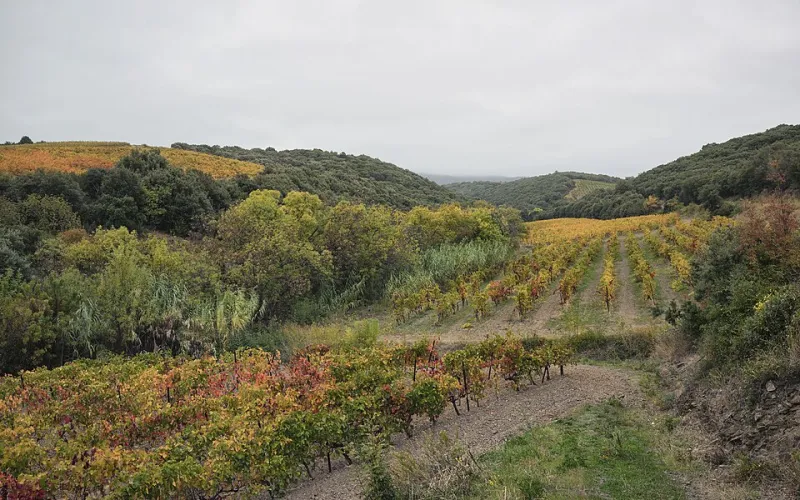
Photo: Christian Ferrer, CC BY 4.0, via Wikimedia Commons
A vineyard, photographed with care, is never merely a vineyard. It is an argument — about land, about memory, about who belongs to a place and what that place owes them in return. When filmmakers turn their lenses toward wine country, they are inevitably making a film about something larger than fermentation: they are excavating national character, settling historical scores, or imagining futures that the present has not yet authorized.
For American audiences whose relationship with international wine culture is often mediated through import labels and restaurant lists, these films offer something no tasting room can provide: the experience of wine as it is actually lived, argued over, mourned, and celebrated in the cultures that built it. Reading these films carefully — understanding what each country chooses to show and, equally importantly, what it elides — constitutes a form of wine education that is both more pleasurable and more profound than conventional study.
France: The Weight of the Canonical
No wine culture carries its own mythology more heavily than France, and French cinema about wine reflects that burden with remarkable consistency. From the philosophical provocations of Jonathan Nossiter's Mondovino — an American-made film that nonetheless captured the French terror of globalization's encroachment on terroir — to quieter domestic productions that portray the vignerons of Burgundy and the Loire as custodians of something almost sacred, French wine cinema tends to operate in a register of elegy.
The French film about wine is frequently a film about loss: of tradition, of family continuity, of the small producer in the face of industrial consolidation. This is not sentimentality but something closer to genuine grief, rooted in a national conviction that wine is not merely an agricultural product but a form of cultural expression that can be permanently damaged by careless hands. The terroir concept — that specific soils, climates, and human practices produce wines unrepeatable elsewhere — is not simply a marketing proposition in French cinema. It is a moral position.
For American viewers, this can feel initially alien. Our own wine culture, built in large part on the romance of innovation and the conquest of new appellations, tends to celebrate the future. French wine cinema insists on the irreplaceable value of the past.
Italy: Contradiction as Aesthetic Principle
Italian cinema about wine is, like Italy itself, magnificently contradictory. It can accommodate, sometimes within the same film, the grandeur of Barolo patriarchs and the anarchic energy of natural wine producers in the volcanic soils of Sicily. Where French wine cinema tends toward solemnity, Italian productions are more likely to find room for comedy, for family argument, for the chaotic abundance of harvest as communal festival.
This reflects something genuine about Italian wine culture, in which regional identity frequently outweighs national allegiance. A film set in the Veneto and a film set in Campania may share a language but inhabit entirely different emotional universes. The Italian wine film is thus rarely a unified national portrait but rather a series of intensely local ones — which may be why Italian wine storytelling has found such a receptive audience among American viewers who have come to appreciate the country's extraordinary regional diversity through the glass.
There is also, in the better Italian wine films, a frank acknowledgment of historical complexity: the role of organized crime in certain wine regions, the tension between DOC regulations and innovative winemakers, the economic precarity of small family estates. Italian wine cinema does not always flatter its subject, and that honesty is part of its appeal.
Spain: Reclamation and Renaissance
Spanish wine cinema is, in many respects, a cinema of reclamation. Following decades in which Spanish wine culture was either ignored internationally or reduced to Rioja and Cava, a wave of documentary and narrative film has accompanied the country's remarkable wine renaissance — celebrating indigenous varieties rescued from near-extinction, profiling a generation of winemakers who studied in France and returned to transform their home regions.
The emotional register here is one of pride recovering from underestimation. Films about producers in Galicia's Rías Baixas, in the high-altitude vineyards of Gredos, or in the ancient clay amphora traditions of Andalusia carry an unmistakable energy of vindication. Spanish wine cinema argues, persistently and persuasively, that the world was not paying sufficient attention — and that the oversight was a loss for everyone.
For American audiences, these films offer a particularly useful corrective. Spain remains underrepresented in the American wine imagination relative to its actual quality and diversity, and its cinema makes the case for deeper engagement with compelling directness.
Australia: Distance as Creative Condition
Australian wine filmmaking is shaped, above all, by geography. The sheer scale of the continent, the extremity of its climate, and its physical isolation from the European traditions it adapted have produced a wine culture — and a wine cinema — defined by improvisation, irreverence, and a particular kind of hard-won confidence.
Australian wine documentaries tend to celebrate the eccentric and the experimental: the Clare Valley Riesling producers who pioneered the screwcap revolution, the McLaren Vale winemakers fermenting in century-old concrete, the Margaret River estates that established their international reputation within a single generation. There is less nostalgia here than in European wine cinema, and more appetite for disruption — a reflection of a wine culture that has never had the luxury of centuries of established practice to fall back upon.
This can be genuinely refreshing for American viewers. Australian wine cinema reminds us that authority in winemaking need not be inherited; it can be earned through rigor, creativity, and a willingness to fail productively.
Emerging Voices: Georgia, Chile, and the Cinema of Arrival
Perhaps the most exciting wine filmmaking currently being produced comes from nations whose wine cultures are asserting themselves on the global stage after long periods of obscurity or suppression. Georgian filmmakers documenting the ancient qvevri tradition — clay amphora winemaking that predates the Roman Empire — approach their subject with the urgency of people who understand that cultural memory can be erased. Chilean productions exploring the País grape's resurgence carry a similar quality of recovered inheritance.
These are films about arrival: about wine cultures announcing themselves to a world that had not been listening. For American audiences open to expanding their understanding of what wine can be and where it can come from, they represent some of the most compelling viewing available — cinema that uses the vine to tell stories of survival, identity, and the stubborn persistence of place.
The glass, it turns out, is a remarkably wide lens.