Terroir as Teacher: What Wine Expertise Can Unlock in World Cinema

There is a moment familiar to anyone who has sat through a serious wine education: the instant when a glass of something unfamiliar stops being merely pleasant and starts being legible. The mineral edge that announces a particular limestone plateau. The compressed tannin structure that speaks to a cooler growing season. The faint oxidative note that places the wine within a specific winemaking tradition. What began as sensory pleasure has become, through patient discipline, an act of interpretation.
That same transformation is available to American audiences willing to approach international cinema as something more than subtitled entertainment. The skills that sommeliers spend years refining—reading layered complexity, situating a work within its cultural and historical context, resisting the urge to flatten nuance into simple preference—translate with surprising precision to the demands of serious world cinema viewing.
The Discipline of Attention
Sommelier training begins, fundamentally, with learning to slow down. The instinct is to gulp, to reach immediately for a verdict. Formal tasting discipline teaches the opposite: to observe color and clarity before the glass ever reaches the lips, to nose the wine repeatedly across several minutes as it opens, to let each sip linger and reveal itself in phases. This structured patience is not pretension. It is methodology.
World cinema asks for something analogous. A film by Hirokazu Kore-eda or Lucrecia Martel does not announce its intentions in the first ten minutes. The emotional architecture is built through accumulation—a recurring gesture, a particular use of ambient sound, the way a character consistently positions herself in a room. American audiences accustomed to the forward momentum of Hollywood narrative sometimes experience this pacing as slowness. The sommelier's instinct reframes it correctly: what reads as slowness is actually depth, and depth rewards those who have learned to wait for it.
Reading Regional Character
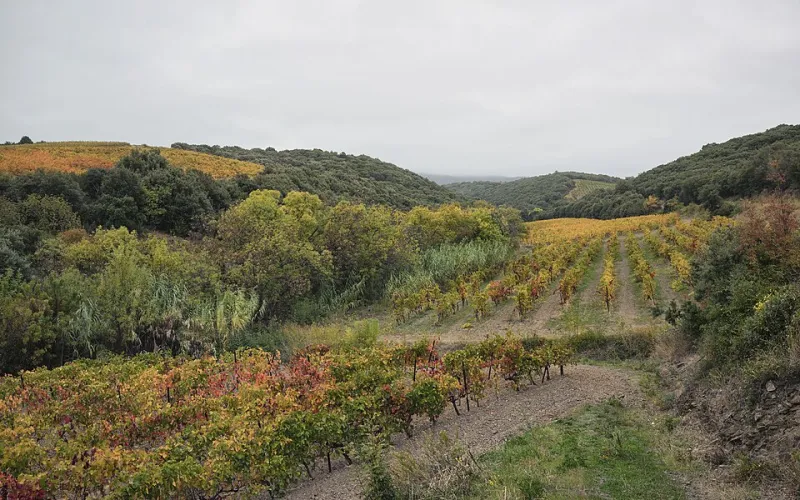
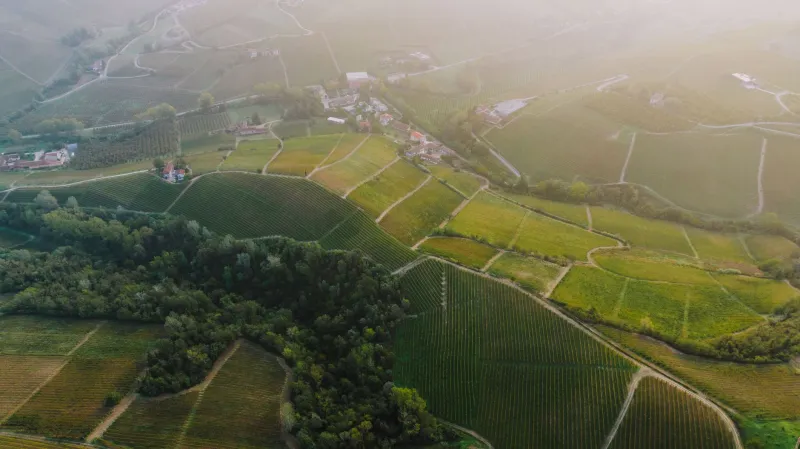
Perhaps the most direct parallel between wine literacy and film literacy lies in the concept of terroir. The French term resists clean translation precisely because it describes something genuinely complex: the ensemble of soil composition, climate, topography, and human tradition that gives a wine its irreducible sense of place. A Burgundy does not merely taste different from a Napa Cabernet because of grape variety. It tastes different because it carries, in some meaningful sense, the character of its origin.
International cinema operates according to the same logic. The films emerging from contemporary Romanian cinema—Cristian Mungiu's moral austerity, Cristi Puiu's suffocating domestic spaces—are not simply stylistic choices made by individual directors. They are expressions of a specific cultural and historical formation: the long shadow of Ceaușescu's regime, the particular texture of post-communist social anxiety, a national relationship to institutional authority that has no direct American equivalent. To watch 4 Months, 3 Weeks and 2 Days without that context is to drink a great Burgundy without knowing it's Burgundy—pleasant, perhaps, but fundamentally incomplete.
Sommelier training builds the habit of asking, before anything else: Where does this come from, and what does that mean? Applied to world cinema, the question opens entire interpretive dimensions that would otherwise remain closed.
Vintage Variation as Historical Lens
A working knowledge of wine vintages teaches something counterintuitive: the same producer, the same vineyard, the same grape can yield dramatically different wines depending on the conditions of a particular year. The 2010 Bordeaux and the 2013 Bordeaux are not interchangeable products. They are records of different growing seasons, different weather patterns, different challenges met with different results. Understanding this trains the mind to think historically—to situate any single bottle within a larger temporal context.
Film historians have long understood that cinema works this way too, though the vocabulary is rarely as precise. The films that emerged from Italian neorealism in the immediate postwar years were shaped by conditions—material scarcity, political rupture, a collective need to document devastation—that were as specific and unrepeatable as a particularly difficult harvest. Iranian cinema of the 1990s bears the unmistakable marks of its political moment: a filmmaking culture that had learned to speak in metaphor because direct speech carried consequences. Korean cinema's extraordinary creative explosion in the years following the 1997 financial crisis cannot be fully appreciated without understanding the social dislocations that produced it.
For American audiences, this historical attentiveness requires deliberate cultivation. The domestic studio system tends to discourage it, presenting films as timeless entertainment products rather than historically situated documents. The vintage-minded wine drinker arrives at world cinema already equipped with a better habit of mind.
Practical Frameworks for the American Viewer
The question of practical application is worth addressing directly. How does a viewer actually bring sommelier-style discipline to an evening with a foreign film?
Begin with provenance research before pressing play. Just as one might briefly review a wine region before opening a bottle—understanding the appellation's general character, the producer's reputation, the vintage's particular conditions—a few minutes spent orienting oneself to a film's national context and production circumstances pays significant dividends. This is not homework in any burdensome sense. It is the equivalent of reading the label.
During viewing, resist the pressure to reach immediate verdicts. The first act of a great world cinema film is often its most disorienting, in the same way that a complex wine's first pour can seem austere or closed. Suspension of judgment is not passivity; it is the prerequisite for genuine engagement.
Afterward, seek out secondary sources with the same curiosity one might bring to reading about a winemaker's philosophy or a region's geological history. Film critics writing from within a film's own culture often perceive dimensions that outside reviewers miss entirely. The American critical consensus on a Korean or Argentine film is a starting point, not a final word.
The Reward of Fluency
Sommeliers sometimes describe a threshold moment when a wine region stops feeling foreign and starts feeling familiar—when the characteristic notes of a particular appellation become recognizable without effort, when the cultural logic of a winemaking tradition becomes intuitive rather than studied. That fluency does not diminish pleasure. It multiplies it.
The same threshold exists in world cinema. The viewer who has spent genuine time with Iranian, Japanese, or Romanian film eventually stops experiencing those traditions as exotic or difficult and begins experiencing them as what they are: distinct cinematic languages with their own grammars, their own recurring concerns, their own accumulated histories. At that point, the entire map of global cinema becomes accessible in ways it simply was not before.
The sommelier's lens, it turns out, is wide enough to take in far more than wine.