Solitude as Method: The Inner Life of the Sommelier and the Auteur Filmmaker
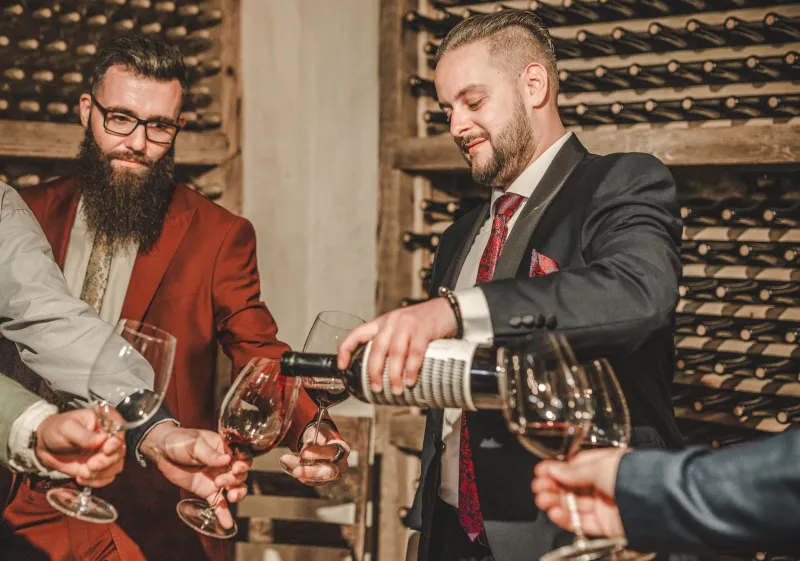
There is a particular kind of loneliness that has nothing to do with being alone. It is the loneliness of perception — of standing in a room full of people and experiencing something that resists translation, something that language can only approximate and company cannot share. The master sommelier knows this feeling intimately. So, in a different register, does the great auteur filmmaker. Both inhabit a professional solitude that is not incidental to their work but structurally essential to it.
To understand why, one must first understand what each discipline actually demands at its most serious level.
The Education of a Single Palate
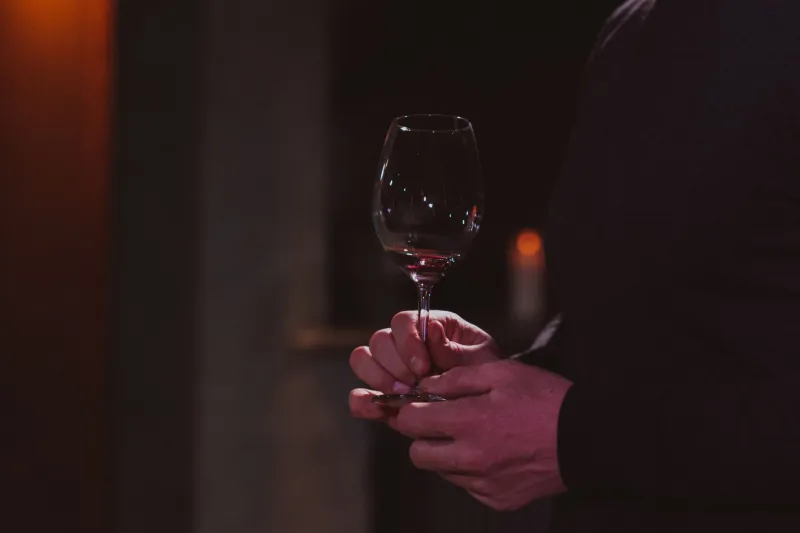
Becoming a sommelier of genuine distinction is not a social enterprise. Certainly, the early stages involve classrooms, mentors, and peer tasting groups. But at a certain point in the development of a serious palate, the practitioner must go inward. The Court of Master Sommeliers — whose Advanced and Master-level examinations represent the most rigorous credentialing process in American wine culture — tests candidates not on their ability to agree with a consensus, but on their capacity to perceive with precision and argue with conviction. When a candidate presents a blind tasting deduction, there is no lifeline, no audience vote. There is only the glass, the memory, and the accumulated architecture of a privately constructed sensibility.
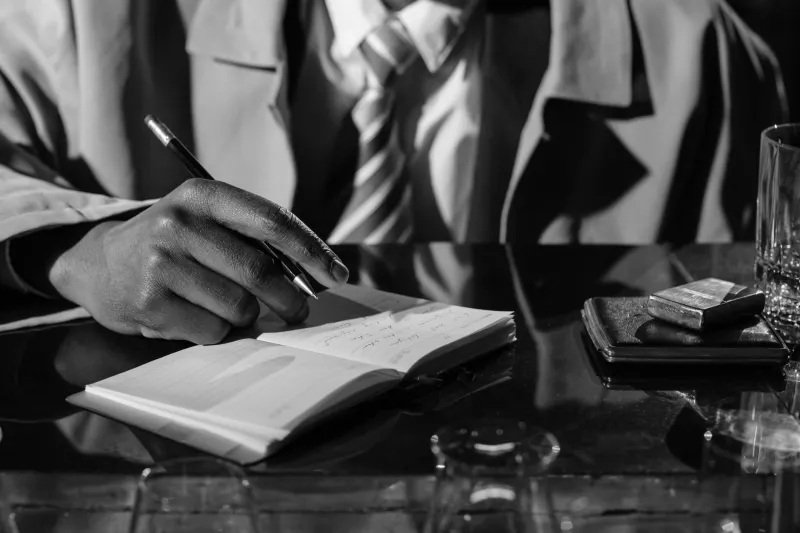
This is a discipline built in solitude. Hours of solo tasting, notebook in hand, building a mental library of aromatic profiles and structural fingerprints. The sommelier's palate is, in the most literal sense, a private instrument — calibrated alone, in silence, against a standard that exists nowhere except within the practitioner's own accumulated experience.
The parallel to auteur cinema is not metaphorical. It is structural.
The Auteur's Withdrawal
When François Truffaut articulated the politique des auteurs in the 1950s, he was not merely proposing a theory of film authorship. He was describing a psychological condition. The director as author is, above all, a director who cannot not express a personal vision — who brings to every commercial assignment, every genre constraint, every studio negotiation, an irreducible private sensibility that marks the work as unmistakably their own.
Consider how American directors working within this tradition have described the actual experience of creative decision-making. Paul Thomas Anderson, whose films move through California's San Fernando Valley with the obsessive geographic fidelity of a winemaker tied to a single estate, has spoken at length about the essential privacy of his process — the way a film's emotional logic must be felt internally before it can be communicated externally. Kelly Reichardt, whose quietly devastating work has largely resisted commercial mainstreaming, operates with a directorial economy that feels less like restraint than like the precision of someone who has already done all the arguing internally and arrived at a position of absolute clarity.
These are not directors who make films by committee. Nor are they, at their best, directors who make films in response to market signals. They make films the way a great sommelier makes a deduction: from the inside out, with a confidence that is inseparable from solitude.
Resisting the Pressure of Consensus
Here the parallel becomes most revealing — and most uncomfortable. Both the master sommelier and the serious auteur filmmaker must, at critical moments, resist the gravitational pull of consensus opinion. This is harder than it sounds, because consensus in both fields is not merely social pressure. It is encoded in critical infrastructure, professional reward systems, and the very language available to practitioners.
In wine, the gravitational pull is toward established hierarchies: the wines that have always been considered great, the regions that have always commanded respect, the styles that score highest with dominant critics. A sommelier who genuinely believes that a producer working outside these hierarchies is making something extraordinary must defend that position against the weight of institutional taste — often to buyers, restaurateurs, or guests who have paid good money to receive the confidence of received wisdom rather than the friction of a genuinely independent perspective.
The auteur filmmaker faces an equivalent pressure. The films that receive financing, distribution, and awards attention tend to cluster around recognizable forms of prestige. To make work that departs significantly from these forms — in pace, in narrative structure, in emotional register — is to accept a degree of professional isolation that most filmmakers, quite rationally, choose to avoid. Those who do not avoid it, who follow the internal logic of their vision wherever it leads regardless of commercial consequence, occupy precisely the psychological space that a great sommelier occupies when recommending an unknown natural producer from an unfashionable appellation with the same conviction they would bring to a classified Bordeaux.
The Audience Problem
Both disciplines ultimately arrive at the same uncomfortable moment: the presentation of a private conclusion to a public audience. For the sommelier, this is the table — the moment when a recommendation is made to guests who may not share, and cannot be expected to share, the depth of sensory education that produced it. For the filmmaker, it is the screening — the moment when a work assembled from years of private creative labor is released into a viewing public whose responses will be as various as their individual histories.
What is remarkable is that in both cases, the practitioner who has done the work most seriously is often the least equipped to make the experience immediately legible. The sommelier who has spent years developing genuine sensitivity to the subtle distinctions between two adjacent Burgundy villages may struggle to communicate that sensitivity to a table that simply wants something red and not too tannic. The filmmaker who has constructed a narrative with the slow, layered complexity of a wine that requires years in bottle may find that the patience their work demands exceeds what most audiences are prepared to offer.
This is not a failure of communication. It is a consequence of depth — the inevitable gap between the private discipline required to produce something of genuine distinction and the public context in which it must ultimately be received.
What Solitude Produces
It would be a mistake to romanticize professional isolation for its own sake. The sommelier who refuses to engage with guests, who disappears into private certainty and offers no translation of their expertise, has failed in a fundamental professional obligation. The filmmaker who retreats entirely from the question of audience, who makes work legible only to a small circle of initiated viewers, has similarly abandoned something essential.
But the solitude itself — the cultivation of perception in private, the willingness to trust sensation over approval, the discipline of returning again and again to the glass or the editing suite alone — is not a deficiency to be overcome. It is the condition of possibility for everything that follows. Without it, there is no genuine taste to communicate, no authentic vision to share.
The loneliness of the serious sommelier and the serious filmmaker is, in this sense, not a problem to be solved. It is the very source of what makes them worth listening to.