When Expertise Becomes a Cage: The Sommelier Mind and the Limits of Film Curation
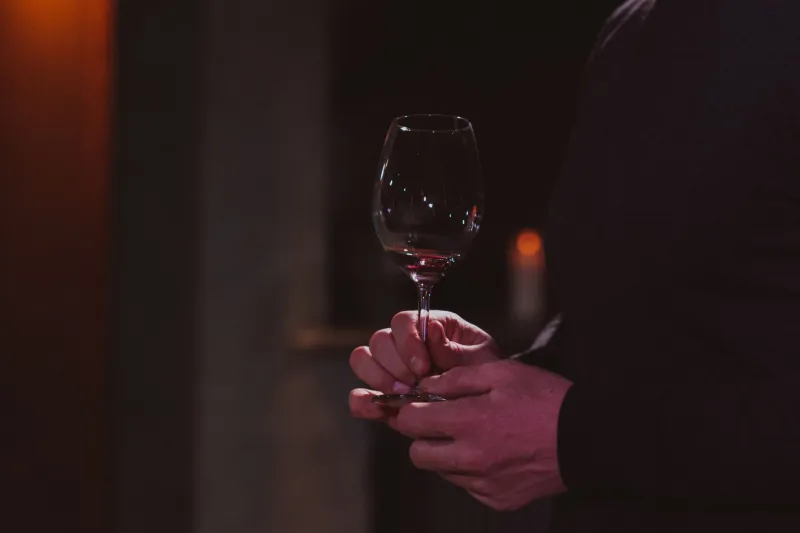
There is a particular kind of dinner party that wine professionals tend to host. Every bottle arrives with a rationale. The Grüner Veltliner precedes the Riesling because acidity should build, not retreat. The Barolo is poured only after the lamb has rested precisely four minutes. The evening is, by any reasonable measure, flawless — and yet something imperceptible is missing. The serendipity. The wrong turn that becomes the best part of the journey.
Now imagine that same mind programming a film festival.
The results, it turns out, are strikingly similar: technically irreproachable, intellectually coherent, and somehow, inexplicably, a little airless.
The Classification Instinct
Sommeliers are trained, above all else, to impose order on complexity. The world of wine is vast and frequently bewildering — thousands of appellations, hundreds of grape varieties, centuries of vintage variation — and the professional palate learns to navigate that wilderness through a rigorous taxonomy. A wine is identified by its region, its producer, its varietal character, its position in a hierarchy of quality. These categories are not merely administrative conveniences; they are the cognitive scaffolding through which expertise is built and communicated.
This is an extraordinary skill. Applied to a cellar, it is indispensable. Applied to a film program, it becomes something closer to a liability.
When a wine-trained mind approaches a collection of films, the instinct is immediate and almost involuntary: group by provenance, sequence by tone, pair by thematic resonance. A documentary about Sicilian olive farmers belongs beside a narrative feature set in Palermo. A slow-cinema meditation from Thailand should follow, not precede, a similarly contemplative work from Taiwan. The Italian neorealists form a flight; the French New Wave is a separate pour entirely. The logic is impeccable. The experience is strangely unsatisfying.
The Tyranny of Coherence
Festival programmers and streaming platform curators who come from wine backgrounds — and there are more of them than the industry tends to acknowledge — often speak about lineups the way a sommelier describes a tasting menu. There is a through-line. There is intentionality. Every selection justifies every other selection, and the whole communicates a thesis.
But cinema, unlike wine, does not reward this kind of internal consistency. The greatest film programs in American cultural history — the early days of Sundance, the anarchic midnight screenings at Anthology Film Archives in New York, the legendary double bills at the Nuart in Los Angeles — derived their power not from coherence but from collision. A Cassavetes film followed by a Hong Kong action picture followed by an obscure Romanian short is not a curatorial failure. It is, potentially, a revelation.
The sommelier's paradox is this: the deeper one's expertise in systematic taste, the harder it becomes to tolerate productive disorder. And productive disorder is, in many respects, what cinema requires.
Pairing as Reduction
Consider the practice of film pairing, which has grown quietly fashionable in certain corners of the American arts-and-entertainment world. Wine bars in cities like Portland, Nashville, and Chicago now regularly host curated screening evenings in which a film is matched to a specific bottle or producer. A sun-drenched Provençal rosé accompanies a breezy French romantic comedy. A tannic Napa Cabernet is poured during a brooding American crime drama. The logic is superficially appealing.
But this practice, however enjoyable as an evening's entertainment, reveals the deeper problem with applying wine logic to film selection. Pairing, by definition, is reductive. It asks what a film is most like, what its dominant mood most closely resembles, and then reinforces that quality with a complementary sensory experience. It does not ask what a film might become in an unexpected context, or what a viewer might discover when their assumptions are quietly undermined.
Great film programming, like great winemaking, is ultimately about transformation. The winemaker who simply expresses what the grape already wants to be is competent. The one who finds something in the terroir that no one anticipated is transcendent. The same distinction applies to curation.
The Case for the Blind Approach
What would it mean to program films the way a skilled taster approaches a blind flight? Not by eliminating knowledge — expertise is never the enemy — but by temporarily suspending the categories that knowledge tends to impose.
A blind tasting strips away the label, the reputation, the price point, and the appellation. It forces an encounter with the thing itself, unmediated by expectation. The wine in the glass is simply what it is, and the taster must respond to it honestly, without the comfortable scaffolding of prior classification.
Applied to film curation, this approach would mean selecting works not because they belong to a recognized tradition or reinforce an established thesis, but because something in the film itself — something difficult to name, resistant to categorization — demands to be seen. It would mean placing a first-time filmmaker from rural Georgia beside a veteran auteur from South Korea not because the pairing makes thematic sense, but because the friction between them might generate something neither could produce alone.
This is, admittedly, a harder sell to festival committees and streaming executives who prefer legible logic. But it is closer to the experience that audiences actually remember.
What Wine Knowledge Can Still Offer
None of this is to argue that wine expertise has no place in the film world. Quite the opposite. The sommelier's sensitivity to nuance, to the way a single element can shift an entire experience, is genuinely useful when applied to the texture of individual films rather than the architecture of programs.
A taster trained to detect the difference between a wine that is merely correct and one that is genuinely alive brings that same discrimination to the screen. They notice when a film is technically accomplished but emotionally inert, when a performance is precise but not present, when a director has honored every convention of their genre without once surprising the viewer. This is valuable critical intelligence.
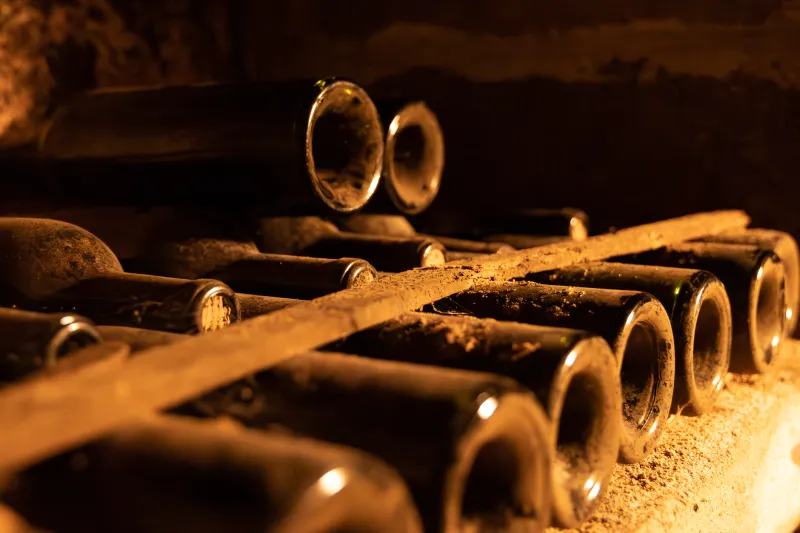
The problem arises not from the expertise itself, but from its misapplication — from treating a film program the way one would treat a tasting menu, when it might be better understood as something wilder and less controllable. A cellar, perhaps, rather than a menu. A place you wander into with a flashlight and an open mind, not a sequence of courses designed to conduct you smoothly from one sensation to the next.
The Surprise That Cannot Be Engineered
The most memorable wine experiences — the ones that serious drinkers return to in conversation for years afterward — are rarely the ones that went exactly as planned. They are the accidental pairings, the bottles opened too early or too late, the unfamiliar producer discovered at a small-town restaurant where the list seemed entirely unremarkable.
Cinema works the same way. The film that changes a life is rarely the one that arrived with the correct credentials and the appropriate context. It is the one that appeared without warning, in the wrong theater, at the wrong hour, and somehow said exactly the right thing.
The sommelier's gift is precision. What great film programming requires, at least some of the time, is the courage to be imprecise — to trust that the unexpected encounter, the ungoverned moment, the bottle opened without a plan, might turn out to be the one worth remembering.