What the Cellar Knows: Cinema's Late Bloomers and the Virtue of Patient Watching
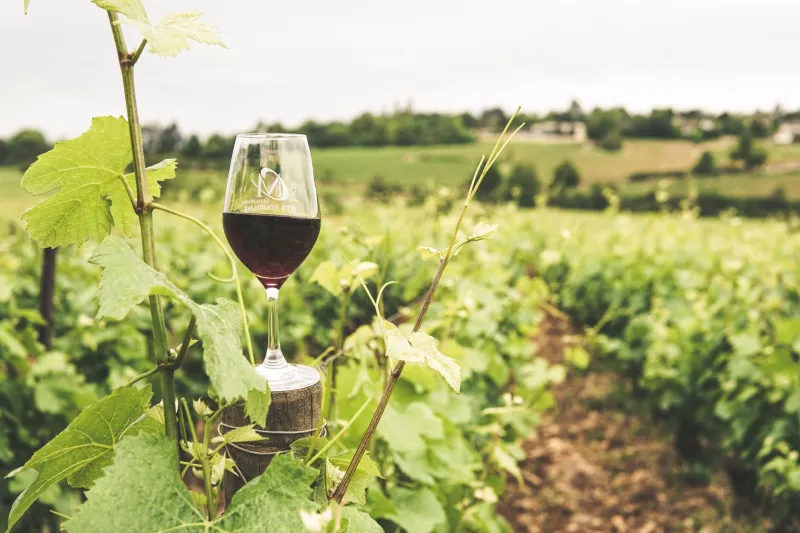
In the wine world, patience is not a virtue so much as a prerequisite. A young Barolo, bottled from Nebbiolo grapes grown on the steep hillsides of Piedmont, can be almost confrontational in its youth—its tannins astringent, its fruit buried beneath a wall of structure that seems to resist the drinker entirely. Lay that same bottle down for fifteen years, and something remarkable has occurred. The tannins have resolved into something silken. Tertiary aromas have emerged—leather, dried roses, forest floor—that were present only in potential during those early years. The wine has become, through time and patience and the slow chemistry of the cellar, a different object than the one that was bottled.
Cinema has its own Barolos.
The Critic's Snapshot and Its Limitations
When a film opens, criticism necessarily operates under conditions that are, in retrospect, somewhat absurd. A reviewer sees the work once, often at a press screening conducted under time pressure, and produces a verdict that feeds into the aggregated consensus that will follow the film for years. That consensus—crystallized in review scores, industry awards, box office performance—becomes the official record of the film's value. The snapshot is taken, and the shutter closes.
What this process cannot account for is time. It cannot account for the possibility that a film's meaning is genuinely incomplete at the moment of release, that its full significance depends on cultural developments that haven't yet occurred, on audiences that haven't yet been formed, on historical events that will retroactively illuminate what the film was actually about.
A Nebbiolo-based wine evaluated too young looks like a failure. It may be, in fact, a masterpiece waiting.
The Evidence of History
The historical record on this point is not ambiguous. Orson Welles's The Magnificent Ambersons, released in 1942 to mixed notices and subsequently mutilated by RKO's editorial intervention, required decades of scholarly attention before its damaged form was recognized as one of American cinema's great tragedies and one of its great achievements simultaneously. Welles himself was dismissed as a spent force within years of his debut; the critical rehabilitation was long and uneven.
Melville's Army of Shadows, completed in 1969 and released in France to a reception colored by the political controversies of the moment, did not reach American audiences in any meaningful way until 2006—thirty-seven years after its creation. The intervening decades had clarified what the film was: not a politically compromised thriller, as some contemporary critics had suggested, but one of the most morally serious examinations of resistance and complicity ever committed to film. The wine needed time in the cellar.
The pattern repeats across decades and traditions. Tarkovsky's The Mirror bewildered Soviet audiences and critics alike upon its 1975 release; its deeply personal, associative structure seemed to deny the viewer any stable ground. Time has revealed it as one of cinema's most profound meditations on memory and selfhood—a film that rewards the viewer precisely because it refuses the consolations of conventional narrative. Stanley Kubrick's Barry Lyndon, greeted in 1975 with a critical shrug and accusations of emotional coldness, is now widely considered among the most visually accomplished films in the American canon. The very qualities that seemed like defects—the deliberate pacing, the formal distance, the refusal of sentimentality—have come to read as the expression of a perfectly controlled artistic vision.
Why Some Films Age and Others Don't
Not every dismissed film deserves reassessment. The cellar analogy is useful here too: not every wine benefits from aging, and mistaking a wine that simply needs time for a wine that is genuinely flawed can result in an unpleasant surprise years down the road. The question of what distinguishes a film that ages well from one that was merely mediocre at release—and remains so—is genuinely interesting.
Wines that reward long aging tend to share certain structural qualities: sufficient acidity to provide freshness over time, tannin levels that will resolve rather than simply dry out, a complexity of flavor compounds that will evolve rather than diminish. The analogous qualities in cinema are perhaps: a structural integrity that doesn't depend on topical reference or fashionable technique, an emotional honesty that operates beneath the level of period style, and—perhaps most importantly—a willingness to ask questions rather than provide answers.
Films organized around ambiguity tend to age particularly well, because ambiguity is a renewable resource. Each generation of viewers brings different anxieties, different frameworks of interpretation, different historical contexts to a film that refuses to close down meaning, and the film accommodates them all. Films organized around the confident delivery of a message tend to age less gracefully; once the message has been absorbed, or once the historical moment that made the message urgent has passed, little remains.
The Problem with Immediacy
Contemporary American film culture is, in almost every structural dimension, organized against patience. Streaming platforms optimize for immediate engagement; the algorithm rewards content that captures attention in the first few minutes and punishes anything that asks the viewer to wait. Social media criticism operates in real time, producing verdicts before films have had any opportunity to settle in the cultural imagination. Opening weekend performance—a metric that reflects marketing efficiency far more than artistic value—is treated as a meaningful indicator of a film's worth.
The result is a critical environment that systematically disadvantages the kind of film most likely to reward temporal aging: the slow, the structurally unusual, the emotionally demanding, the culturally specific. These are precisely the films that have historically proven most durable.
There is something worth mourning in this. A generation of viewers trained to expect immediate legibility may be developing a genuine incapacity for the kind of patient engagement that great cinema—like great wine—requires. The cellar requires not just physical space but a particular orientation toward time, one that our current culture does not especially encourage.
Toward a More Patient Criticism
None of this suggests that immediate criticism is without value. The first response to a work of art is data, even when it proves incomplete. But there is a strong case for cultivating what might be called a second-vintage sensibility: the habit of returning to films after significant intervals, of treating one's initial response as provisional, of remaining genuinely open to the possibility that time will reveal something that was not accessible on first encounter.
This is not a radical proposition. It is, in fact, what the greatest wine drinkers do as a matter of course. They open bottles at different stages of development, compare notes across years, maintain a productive uncertainty about when any given wine has reached its peak. They understand that the relationship between a wine and its drinker is not a single transaction but an ongoing conversation.
The films worth watching are the ones worth returning to. And the ones worth returning to are often not the ones that announced themselves most confidently on arrival. The cellar knows things the opening weekend cannot.