The Pleasure Gap: Why Professional Taste-Makers Keep Talking Past the Audiences They Serve

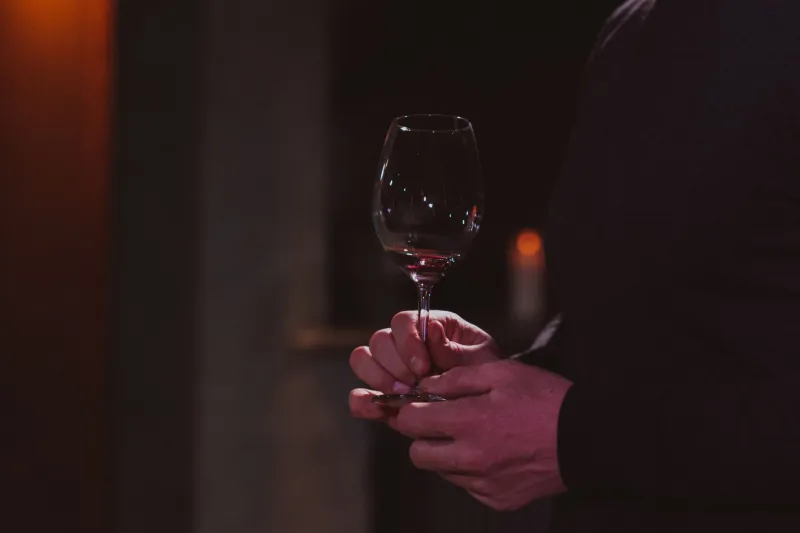
There is a particular kind of silence that falls over a dinner table when someone with genuine authority on wine begins to describe what is in the glass. The other guests — people who may enjoy wine enormously, who purchase it regularly, who feel something real when they drink it — suddenly find themselves at a remove from their own experience. The expert has spoken. The pleasure, somehow, has been reclassified.
The same silence, it turns out, descends in multiplex lobbies across America every weekend. A film emerges, earns enthusiastic notices from critics citing its debt to Bresson or its structural kinship with early Cassavetes, and then proceeds to earn a C+ CinemaScore from the audiences who actually purchased tickets. Neither party is wrong, precisely. But something has gone badly misaligned.
The Architecture of Distance
Professional criticism, in both wine and cinema, is built on accumulation. A working critic accrues references — vintages tasted, films absorbed — until individual works can only be understood in relation to everything that came before them. This is not a flaw in the system. It is, in fact, the system's entire purpose. The question is whether that purpose has drifted away from its original audience.
Consider how a seasoned wine writer might approach a glass of California Pinot Noir. The evaluation is conducted against a mental archive of Burgundian benchmarks, weighted by the performance of the vintage, cross-referenced against the producer's prior releases. What the writer produces is genuinely sophisticated. It is also, for someone who simply wants to know whether the wine tastes good with dinner, almost entirely useless.
Film criticism operates on a parallel track. When a major publication assigns a star rating to a new release, that rating reflects not only what the reviewer experienced in the theater but what they have experienced in every theater before it. The ordinary moviegoer, arriving without that accumulated context, is essentially being asked to appreciate a painting by studying its relationship to paintings they have never seen.
The Ethics of the Gatekeeping Role
There is an ethical dimension to this problem that the critical establishment in both fields has been slow to acknowledge. Taste-making carries authority, and authority carries responsibility. When critics consistently reward work that demands prior knowledge to appreciate — while marginalizing work that offers immediate, unmediated pleasure — they are not merely expressing preference. They are shaping what gets made, what gets distributed, and what gets remembered.
In wine, this dynamic has produced its own casualties. Certain grapes and regions have spent decades in critical purgatory not because they fail to deliver pleasure but because the pleasure they deliver is considered too accessible, too uncomplicated, too lacking in the intellectual friction that critics mistake for quality. American consumers who love a well-made Riesling from Washington State or a straightforward Zinfandel from Lodi have been made to feel, often quite explicitly, that their preferences require apology.
The cinema parallel is equally stark. Genre films — thrillers, romantic comedies, horror pictures made with genuine craft and audience-awareness — routinely receive critical dismissal that has less to do with their actual execution than with their category. The bias is structural. Complexity is coded as virtue. Pleasure is treated as a concession.
Critics Who've Noticed the Problem
Not every professional in either field is comfortable with this arrangement. A number of working critics have begun, with varying degrees of public candor, to question whether the expertise that qualifies them to evaluate also disqualifies them from something important.
One prominent wine educator who has spent two decades training sommeliers in New York recently described the moment she realized her palate had become, in her own words, "a very expensive prison." She could identify flaws in wines that consumers found perfectly delightful. She could articulate precisely why a beloved bottle was technically inferior. What she found herself unable to do, for a period of several years, was simply enjoy a glass without the critical apparatus running in the background. The pleasure, she said, had been educated out of her.
A similar confession has become something of a recurring motif among film critics willing to speak honestly about their relationship to mainstream cinema. The professional obligation to evaluate, to compare, to contextualize can hollow out the raw experience of watching. One veteran reviewer at a national publication described sitting through a crowd-pleasing blockbuster and feeling genuine envy for the audience around him — people who were, by every visible measure, having a better time than he was.
What Accessibility Is Actually Arguing For
The defense of accessible criticism is not an argument for lowered standards. This distinction matters enormously, and it is one that critics in both fields tend to collapse when the subject is raised. Championing work that delivers immediate pleasure is not the same as championing mediocrity. It is, rather, an insistence that pleasure itself is a legitimate critical category — one that deserves the same rigorous attention currently lavished on complexity and historical precedent.
The finest wine educators in America have begun to articulate this position with increasing clarity. Teaching someone to appreciate wine well means teaching them to trust their own response before reaching for comparative frameworks. The experience in the glass precedes the vocabulary used to describe it. When criticism reverses that order — when the framework arrives before the experience and shapes what the drinker is permitted to feel — something fundamental has been inverted.
Cinema offers the same lesson, imperfectly learned. The films that endure in popular memory, that pass between generations not through syllabi but through genuine affection, are not always the ones that critics identified as significant at the time of release. They are frequently the ones that gave audiences something real to take home: an emotion, a story, a moment of recognition that required no prior reading to access.
Toward a More Honest Criticism
What would it look like for critics in both fields to take pleasure seriously as a primary value rather than a secondary one? It would require, first, a willingness to acknowledge that the expert's experience is not the universal experience — that the accumulated context a professional brings to a screening or a tasting changes what they are capable of perceiving, and not always for the better.
It would also require a different kind of honesty in writing. Not the abandonment of expertise, which would be its own form of failure, but a transparency about where expertise ends and genuine response begins. The most useful criticism in either domain has always been the kind that invites the reader into an experience rather than standing between them and it.
In wine, this means writing that makes the glass feel approachable without making it feel simple. In cinema, it means criticism that honors the audience's intelligence without demanding that they share the critic's education as a condition of entry.
The pleasure gap is not inevitable. It is a choice — one that professional taste-makers in both fields make, consciously or otherwise, every time they sit down to write. Closing it would not diminish the authority of criticism. It might, in fact, be the thing that restores it.