Ghosts in the Glass: How Childhood Wine Memories Haunt a Director's Entire Career
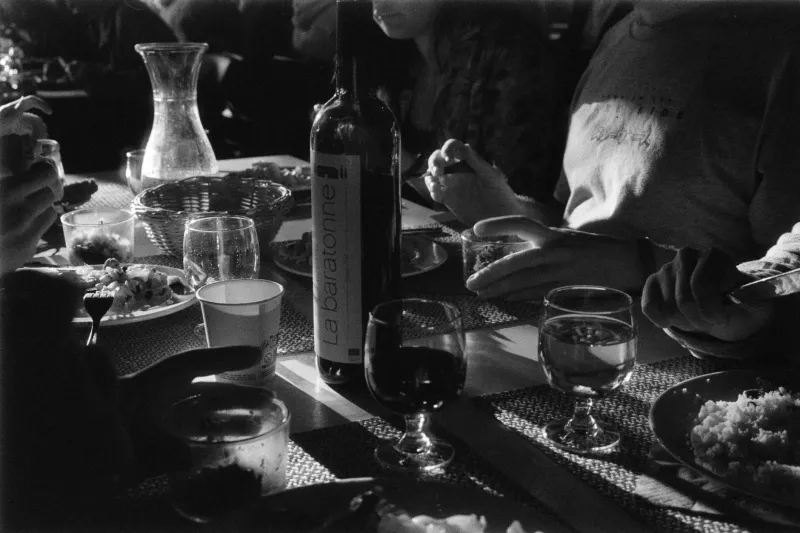
There is a particular kind of artistic obsession that does not announce itself. It does not arrive in a director's notes or press interviews as a declared influence. It surfaces instead in the recurring quality of light in a dining room scene, in the way a character's hand hesitates before lifting a glass, in the specific silence that falls over a table when a bottle is finally opened. These are the fingerprints of sensory memory — and few sensory memories run as deep, or as quietly, as those formed around wine.
Wine occupies an unusual position in the catalogue of childhood impressions. Unlike a painting hung on a wall or a novel passed between generations, it is experienced through the body. It carries temperature, weight, and a smell that the brain files alongside emotion rather than intellect. A child who witnesses a parent weep while opening a particular bottle from a particular year does not understand what they are seeing in any analytical sense. But they absorb it. And decades later, when that child becomes a filmmaker, the feeling resurfaces — not as a subject, necessarily, but as a structure.
The Sensory Archive
Memory researchers have long noted that smell and taste occupy a privileged position in autobiographical recall. The olfactory system connects more directly to the hippocampus and amygdala — the regions governing memory and emotion — than any other sense. This is the neurological basis for what writers since Proust have described as involuntary memory: the way a scent or flavor can collapse decades in an instant, returning a person not merely to a recollection but to the felt experience of a prior moment.
For filmmakers, this has profound implications. A director drawing on a literary source or a visual reference engages a different kind of memory — one that is largely cognitive and reconstructive. But a director reaching back toward a wine-related experience is drawing on something more primal. The memory arrives whole. It carries with it not just imagery but atmosphere, tension, the precise emotional weather of a room. It is, in a sense, already cinematic before the camera is raised.
This may explain why wine moments in film so often feel disproportionately weighted. A scene built around the opening of a bottle frequently carries more emotional freight than its narrative position would seem to warrant. The audience senses that something personal is at stake — because something personal almost certainly is.
The Recurring Table
Consider how frequently the most deeply personal films of celebrated directors return to the image of wine at a family table. This is not coincidence, nor is it simply cultural shorthand for domestic ritual. In many cases, it represents the filmmaker's most direct route back to a specific emotional truth from their own history.
The Italian neo-realist tradition, for instance, is saturated with wine as a marker of both abundance and deprivation. Directors who came of age in the postwar decades — surrounded by families for whom a decent bottle represented genuine sacrifice — encoded that ambivalence into their work at a structural level. The wine in those films is never merely wine. It is the weight of what the family can and cannot afford to feel.
Similarly, among contemporary American independent filmmakers who grew up in households where European wine culture was either aspirational or absent, the appearance of wine on screen frequently signals a character's complicated relationship with class and belonging. The director is not simply placing a prop. They are returning to a dinner table from their youth and asking, once more, what it meant to pour or to be poured for.
When Loss Becomes the Label
Perhaps the most powerful category of formative wine memory involves grief. A bottle opened at a funeral reception. A vintage discovered in a parent's cellar after their death. A final shared glass that neither party knew would be the last. These experiences imprint themselves with extraordinary force, and filmmakers who have carried them tend to return to them — sometimes consciously, often not.
The wine in these moments becomes what semioticians might call a loaded sign: an object that means far more than its physical reality. When a director stages a scene in which a character opens a very old bottle alone, or pours a glass they cannot bring themselves to drink, they are frequently not inventing. They are remembering. The specific emotional register — the combination of reverence, sorrow, and something close to ceremony — is too precise to be purely imagined.
What distinguishes this kind of artistic return from mere nostalgia is its productive quality. The filmmaker is not simply revisiting the past for comfort. They are using the sensory anchor of wine to access an emotional truth that resists more direct articulation. The glass becomes a vehicle for saying what cannot otherwise be said.
Youth, Formation, and the Vintage That Never Leaves
In wine culture, the concept of a formative vintage is well understood. Sommeliers and collectors speak of the wines that first opened their palates — the bottle that made the world taste different afterward. These are not necessarily the greatest wines ever encountered. They are the wines that arrived at the right moment, when perception was still being formed and the encounter left a permanent mark.
Directors carry their own formative vintages, though the currency is experiential rather than liquid. A filmmaker who, at twelve years old, watched their grandfather pour the last bottle of a wine made before the war — watched the care with which it was handled, the silence that accompanied the first taste — carries that scene forward into every film they make. It becomes part of their emotional vocabulary. It teaches them something about time, about irreversibility, about the weight of objects that hold memory.
The interesting question is not whether these experiences shape a filmmaker's work — they clearly do — but how a sophisticated audience might learn to read their presence. The wine moment in a mature director's filmography is rarely decorative. It is almost always confessional, even when it appears incidental. Watching for it, and understanding what it might represent, transforms the act of film-watching into something closer to archaeology: a careful excavation of the sensory past that made the artist who they are.
Reading the Bottle
For audiences attuned to both cinema and wine culture, this interpretive layer offers a genuinely distinctive form of engagement. It asks viewers to consider not just what a film is about, but what experience it is reaching back toward — what dinner table, what cellar, what particular quality of afternoon light falling across a glass of something opened too early or too late.
The directors who return most compulsively to wine are not, in most cases, making films about wine. They are making films about time, about family, about the moments that form us without our consent. Wine simply happens to be the medium through which those moments were first recorded in the body. It is the original film — the one that ran before any camera was switched on — and some filmmakers spend their entire careers trying to develop it properly.
In this sense, the vintage problem is not a problem at all. It is a gift: a sensory archive so vivid and so emotionally precise that it continues to generate material across decades of work. The glass was lifted long ago. The film is still being made.