Rooted in Place: How the Land a Director Calls Home Shapes Every Frame They Shoot
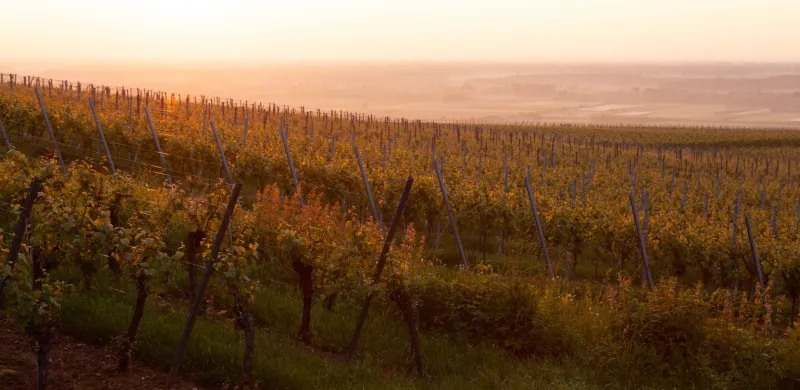
In the vocabulary of wine, terroir is everything. It is the particular combination of soil chemistry, elevation, prevailing winds, annual rainfall, and the angle at which afternoon light falls across a hillside. No two plots of earth produce identical wine, even when the same grape variety is planted a few hundred meters apart. The land speaks, and the vine listens. What is less frequently acknowledged—though no less demonstrably true—is that cinema operates by a strikingly similar principle. The directors who have shaped world cinema most profoundly are, in many cases, directors whose visual instincts were formed by a specific geography long before they ever touched a camera.
This is not a metaphor. It is an argument about perception itself.
The Humid Patience of Hou Hsiao-hsien
Consider Hou Hsiao-hsien, the Taiwanese master whose films move with the unhurried deliberation of a subtropical afternoon. His frames are wide and still, populated by figures who drift in and out of deep focus as though the camera were simply observing a landscape rather than constructing a narrative. Rain arrives without announcement. Time accumulates rather than advances. Critics have long described his style as contemplative, but the more precise word may be agricultural. Taiwan's northern terrain—layered with mist, bisected by rivers, governed by the rhythms of rice cultivation and seasonal typhoon cycles—does not encourage urgency. It rewards patience.
In films such as A City of Sadness and The Puppetmaster, Hou allows scenes to breathe past the point where most Western directors would cut. The effect is disorienting for audiences trained on faster editorial rhythms, yet deeply immersive for those willing to surrender to its pace. A winemaker from the same region would recognize this instinct immediately. Taiwanese high-mountain oolongs, grown in conditions of persistent cloud cover and slow-ripening altitude, develop complexity precisely because the process is never rushed. The flavor arrives on its own schedule. So does Hou's meaning.
The Grey Accumulation of the Dardenne Brothers
Move westward to the Meuse Valley in the Walloon region of Belgium, and the landscape changes entirely. The hills flatten into a post-industrial corridor of brick and concrete, where the light is almost chronically overcast and the horizon is rarely uncluttered by a factory chimney or a motorway overpass. This is the territory of Jean-Pierre and Luc Dardenne, and their cinema is inseparable from it.
The Dardennes shoot almost exclusively on handheld cameras, following their characters at close range with a restless, documentary urgency that feels less like filmmaking and more like witness. Their color palette is desaturated to a near-monochrome grey-green, and their stories concern themselves with economic precarity, moral compromise, and the grinding weight of ordinary life. None of this is accidental. Liège and its surrounding towns have been shaped for generations by the decline of steel and coal industries, and the human texture that remains is one of stubborn endurance rather than romantic aspiration.
If Hou's cinema is the equivalent of a high-altitude Taiwanese oolong—slow, layered, fragrant with restraint—then the Dardennes produce something closer to a northern Belgian farmhouse ale: yeasty, slightly bitter, fermented under pressure, and deeply honest about what it is. Their terroir is not beautiful in any conventional sense, but it is truthful in a way that only sustained proximity to a particular place can produce.
The Saturated Heat of Pedro Almodóvar
Spain's La Mancha is a landscape of extremes. The central plateau bakes under summer temperatures that routinely exceed 100 degrees Fahrenheit, and the light it generates is not the golden warmth of Provence but something harsher and more confrontational—a light that strips away shadow and forces everything into full, unsparing exposure. The wines of the region, particularly those made from the Tempranillo and Garnacha grapes grown around the Valdepeñas appellation, reflect this intensity: they are bold, high in alcohol, saturated with dark fruit, and entirely without apology.
Pedro Almodóvar, born in Calzada de Calatrava in the heart of this terrain, has built an entire cinematic language from exactly these qualities. His color grading is among the most distinctive in contemporary world cinema—reds that seem to vibrate off the screen, yellows so intense they approach fever, interiors designed as if emotion itself had been given a Pantone code. His narratives, similarly, do not shade into ambiguity when they can achieve clarity through confrontation. Desire, grief, identity, and transgression are handled not with the diffuse melancholy of northern European cinema but with the full-frontal directness of a landscape that has no patience for understatement.
Almodóvar has spoken in interviews about his Manchegan upbringing as foundational to his sense of color and his comfort with melodrama. What he describes is, in essence, a terroir argument: the place formed the sensibility, and the sensibility formed the films.
Does Origin Determine Vision?
The question worth pressing is whether this relationship between geography and filmmaking style is deterministic or merely influential. Clearly, not every director from Taiwan makes films like Hou Hsiao-hsien, just as not every wine from Burgundy achieves the complexity of a premier cru. Terroir sets the conditions; it does not guarantee the outcome. What it does do, for both the winemaker and the filmmaker, is establish a set of perceptual defaults—a baseline understanding of light, rhythm, and proportion that forms in childhood and persists, often unconsciously, throughout a creative life.
American audiences, accustomed to a cinema largely produced in conditions of artificial light and climate-controlled studio environments, may find this framework unfamiliar. Hollywood's dominant visual language was not grown in any single soil; it was engineered for universal legibility. But the most distinctive American filmmakers—Terrence Malick in the Oklahoma grasslands, Kelly Reichardt in the Pacific Northwest, David Gordon Green in the humid American South—demonstrate that the principle holds even here. The landscape finds its way into the frame.
The Sommelier's Question
A skilled sommelier, presented with an unmarked glass, does not simply identify a grape variety. They identify a place. The mineral salinity of a Chablis speaks of Kimmeridgian limestone. The volcanic smokiness of an Etna Rosso speaks of Sicilian basalt. The provenance is written into the wine whether the winemaker intended it or not.
The same discipline, applied to cinema, yields a similarly illuminating practice. When we ask not merely what a film is about but where it comes from—geographically, climatically, agriculturally—we begin to read it with the same precision a sommelier brings to a blind tasting. The frame reveals its soil. The pacing reveals its seasons. The color reveals its light.
This is the terroir effect in cinema: not a romantic notion about artists drawing inspiration from picturesque surroundings, but a rigorous claim about how geography shapes perception, and how perception, over a lifetime of looking, becomes style. The director, like the vine, grows where it is planted. And the work, like the wine, carries the earth within it.