One Story, Many Harvests: The Directors Who Cannot Stop Reimagining Their Own Work
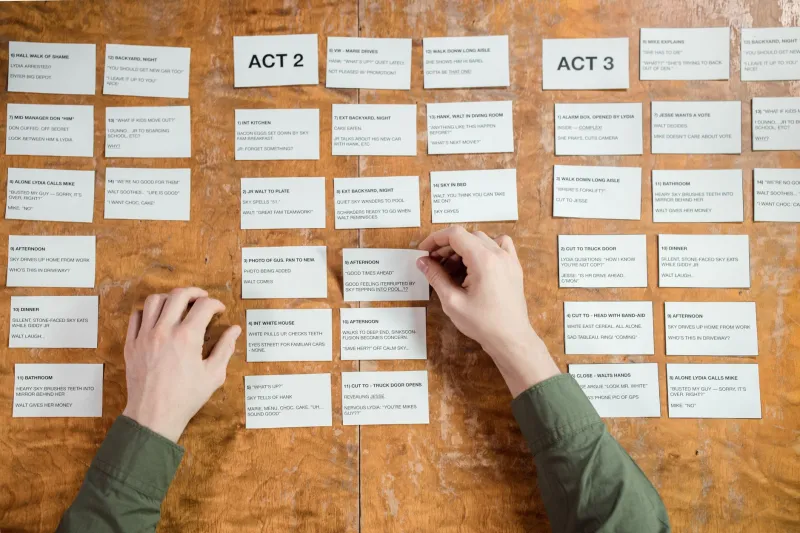
In the Rhône Valley, certain winemakers speak of a particular vineyard parcel the way others speak of an unresolved argument — with reverence, with frustration, and with the quiet conviction that they have not yet said everything it has to say. Each vintage offers another opportunity: a different growing season, a subtler hand in the cellar, a more patient eye at the sorting table. The wine changes. The obsession does not.
Cinema has its own version of this compulsion. Across the history of the medium, a distinct category of filmmaker has emerged — directors who return, sometimes decades apart, to the same essential story. Not remakes in the commercial sense, where studios recycle intellectual property for fresh revenue streams, but something more private and more urgent: an artist circling a fixed point, convinced that the last attempt fell short of what the material deserved.
To watch these films in sequence is to taste the same grape across different harvests. The structure is recognizable. The obsession is unchanged. What varies is everything else.
The Haneke Method: Precision as Provocation
Michael Haneke is perhaps the most deliberate practitioner of this form. In 1997, the Austrian director released Funny Games — a deeply unsettling home-invasion film that turned its violence inward, implicating the audience in the spectacle they had paid to witness. A decade later, in 2007, he remade it. Shot for shot. In English. With American actors on an American lake house.
The critical response was divided, and instructively so. Many dismissed the remake as redundant, a gesture so self-referential as to border on arrogance. Others recognized something more deliberate at work. Haneke had not remade Funny Games because he had forgotten what he intended. He remade it because the intention required a different vessel. The European art-house audience that received the 1997 film was already predisposed to its critique. The American mainstream — the audience for whom the film's argument about screen violence was most pointed — had never been forced to sit with it. The wine, in other words, needed a different glass.
This distinction matters enormously. The remake was not a refinement of craft. It was a refinement of address. Haneke understood that the same story, told to a different audience, becomes a different story. Terroir, as any serious winemaker will confirm, is not only about soil. It is about context.
Almodóvar's Spiral: Memory as Raw Material
Pedro Almodóvar operates differently, and the difference is revealing. Where Haneke returns to a single text with surgical intentionality, the Spanish director has spent five decades circling a cluster of themes so consistent they constitute a personal mythology: maternal sacrifice, fluid identity, the violence men do to women, and the redemptive possibilities of female solidarity. His films do not remake one another. They rhyme.
Pepi, Luci, Bom (1980) and Parallel Mothers (2021) share almost no narrative DNA. Yet the emotional and moral questions they pose are recognizably related — the same vineyard, different growing seasons, radically different yields. What Almodóvar demonstrates is that creative obsession need not manifest as literal repetition. A director can spend an entire career asking the same question and never repeat themselves formally. The question simply deepens with each asking.
For American audiences encountering Almodóvar's later work without the context of his earlier films, something essential is lost — much as tasting a winemaker's current release without knowing their earlier vintages leaves the palate without a reference point. The 2021 film is richer, more formally controlled, more emotionally complex than anything Almodóvar made in the 1980s. But it is also in conversation with those earlier works in ways that reward patience and retrospective attention.
Fincher and the Architecture of Doubt
David Fincher presents a third variation. His relationship to narrative obsession is less thematic than structural. Fincher does not return to the same story so much as the same question: how do institutions — legal, corporate, domestic — betray the individuals who trust them? Se7en, Zodiac, The Social Network, Gone Girl, and Mank are not the same film. But they are made by someone who cannot stop being interested in the mechanisms by which systems corrupt and conceal.
What is notable about Fincher's case is the degree to which his craft has visibly evolved in service of a fixed preoccupation. The formal control of Zodiac (2007) is considerably more refined than the sometimes overwrought style of Se7en (1995). Yet the underlying anxiety is identical. He is a winemaker who has grown more precise in the cellar without changing the grape variety or the vineyard. The obsession is stable. The execution is not.
This is perhaps the most instructive model for thinking about creative repetition in cinema. Fincher's films do not feel redundant because the refinement is visible. Each successive work demonstrates a measurable evolution in how the director handles the material he cannot put down. The vintage question, in his case, has a clear answer: the returns are not diminishing. They are compounding.
What Repetition Reveals
The more skeptical position — that returning to the same material signals creative limitation rather than artistic depth — deserves serious consideration. There are directors whose obsessive returns feel less like refinement and more like inability to move forward. The distinction, ultimately, may lie in self-awareness. Haneke knows exactly what he is doing when he remakes his own film. Almodóvar appears to understand that his recurring themes are not constraints but the very source of his authority. Fincher's formal evolution suggests a director genuinely learning from each encounter with his preoccupations.
The winemaker analogy holds here as well. A producer who makes the same wine year after year without acknowledging the variation in conditions is not refining a signature — they are simply repeating a formula. But a producer who engages consciously with what each vintage offers, who adjusts and reconsiders and remains curious about what the same raw material might yet yield, is doing something else entirely. They are practicing a discipline that requires both fidelity and flexibility.
For audiences, particularly American audiences accustomed to consuming films as discrete, self-contained experiences, the invitation is to watch differently. To approach a director's body of work as one approaches a vertical tasting — not asking which vintage is definitive, but what the progression reveals about the maker's evolving relationship with their material.
The Unfinished Blend
There is no final vintage. The winemaker who claims to have perfected their wine has stopped listening to their vineyard. Similarly, the director who believes they have exhausted what a particular obsession can teach them has, in some meaningful sense, stopped growing.
What makes the filmmakers discussed here compelling is not the repetition itself, but what the repetition makes visible over time: a set of values, a cluster of anxieties, a way of seeing the world that no single film could fully contain. The story they keep returning to is never quite the same story, because they are never quite the same director.
The vintage question, then, is not whether an artist should return to familiar territory. It is whether they return with genuine curiosity — or merely with habit. The difference, like the difference between a great wine and a merely competent one, is everything.