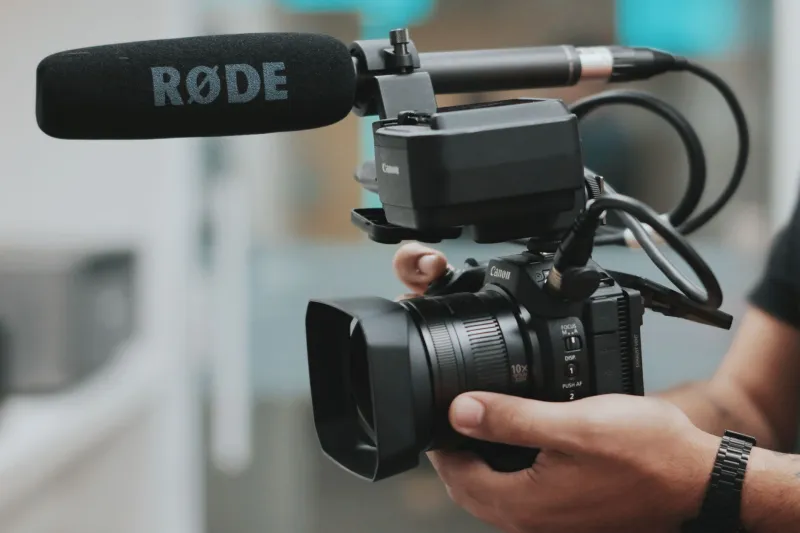
Crushed Beneath the Romance: What Wine Films Keep Getting Wrong About the Harvest
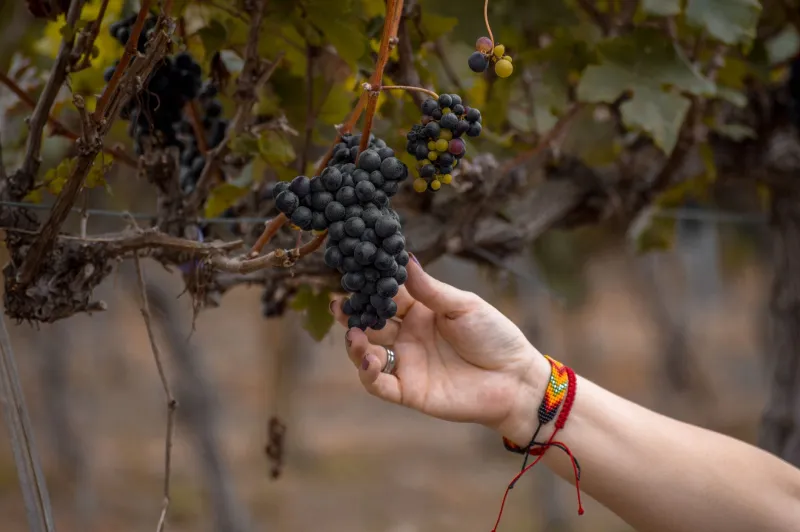
There is a particular kind of scene that appears, with remarkable consistency, in nearly every film that dares to take winemaking seriously as its subject. The vines glow amber in late-afternoon light. Workers move through the rows with an unhurried grace that suggests ritual rather than labor. Someone, usually the protagonist, lifts a cluster of Pinot Noir to the sun and smiles with the quiet certainty of a person who has found their purpose. The score swells. The audience exhales.
It is, without question, beautiful. It is also, according to nearly every working winemaker consulted for this piece, almost entirely false.
The Aesthetics of Abundance
The problem is not simply one of inaccuracy. Cinema has always been granted the license to compress, to idealize, to transform the mundane into the meaningful. What distinguishes wine-centric filmmaking from other romanticized portrayals — the war film that softens its casualties, the courtroom drama that sharpens its arguments — is the degree to which the distortion serves a very specific commercial and emotional purpose. Harvest scenes in wine films are not incidental backdrops. They are the argument. They are the film's thesis statement about what wine means, and by extension, what the good life looks like.
That thesis, almost universally, is one of abundance, beauty, and earned reward. The harvest arrives on cue. The fruit is perfect. The family gathers. The struggle, if it existed at all, belongs to an earlier act.
What this framing consistently omits is the harvest as a site of genuine terror.
"The week before we pick, I don't sleep," says one California winemaker who has been farming a small estate in Sonoma County for over two decades. "You're watching the weather forecast like it's a stock ticker. You're tasting the grapes every morning wondering if the sugars are where they need to be, if the acids are dropping too fast, if that bit of rain on Thursday is going to bring botrytis into the block you've been nursing all season. It's the most stressful week of the year, every year. I've never once stood in the vineyard and just... smiled."
What the Camera Refuses to Show
The financial architecture of winemaking is perhaps the single most conspicuous absence in wine cinema. Independent wine films — the kind that follow a passionate couple abandoning corporate careers to plant vines in Oregon or Virginia — treat the business dimension as a minor inconvenience to be dispatched in a single montage of concerned phone calls and bank paperwork. The audience understands that money is tight. The audience is then invited to forget it.
In reality, the economics of small-scale winemaking in the United States are, for most producers, genuinely brutal. The cost of establishing a vineyard, building or renting a production facility, obtaining the necessary permits, and waiting three to five years before the first commercially viable vintage arrives is not the stuff of a brief second-act complication. It is the central drama of most winemakers' lives, and it frequently ends not in triumph but in foreclosure, burnout, or the quiet sale of a property to a larger conglomerate.
Films rarely follow that story to its conclusion. When they do — when a wine narrative actually commits to depicting financial failure — the result tends to feel almost transgressive, a violation of the genre's unspoken contract with its audience.
"We pitched a documentary about a family winery in the Central Valley that had been farming for three generations and was about to lose everything," recalls one documentary filmmaker who has spent years working in the wine space. "Every distributor we talked to said the same thing: they loved the family, they loved the visuals, but they needed to know there was a way through. They needed a resolution. The idea that the story might just end with the land being sold — that wasn't a film anyone wanted to release."
The Labor Question
There is another dimension to the harvest's misrepresentation that touches on something more politically uncomfortable than aesthetics or economics. The workers who appear in wine films — when they appear at all — are almost always rendered as background texture: colorful, warm, peripheral. The immigrant labor force that picks the majority of American wine grapes, often under conditions of genuine physical hardship and legal precarity, is not a subject that wine cinema has shown any meaningful appetite to examine.
This is not an oversight born of ignorance. Filmmakers who spend time in wine country cannot avoid encountering the realities of agricultural labor. The choice to frame harvest workers as picturesque rather than as protagonists with their own complex relationship to the land and the product is a choice — an editorial decision with ethical implications that the genre has largely declined to interrogate.
The contrast with, say, the tradition of social realist cinema or even the more committed strands of American documentary filmmaking is striking. Wine films have, with rare exceptions, made their peace with the perspective of the owner.
What Authenticity Might Actually Look Like
The question worth asking is not simply why wine films get the harvest wrong, but whether getting it right would require abandoning the genre's core appeal entirely. The answer, perhaps surprisingly, is no.
Some of the most compelling wine-adjacent storytelling in recent years has found ways to honor both the beauty and the difficulty of the work without sacrificing one to the other. The tension between a winemaker's aesthetic vision and the biological reality of a difficult vintage — a season of hail, a summer of smoke, a harvest that arrives two weeks too early because climate patterns have shifted in ways that no one anticipated — is not less cinematic than the golden-hour fantasy. It is, if anything, more so. Conflict generates drama. Uncertainty generates suspense. The question of whether the wine will be any good is actually interesting.
"The best harvest I ever had was also the most frightening," says the Sonoma winemaker. "We picked in the rain. It was chaos. Half the crew didn't show up. We were sorting by headlamp at two in the morning. And the wine turned out to be the best thing I've ever made. That's the story. I've never seen that story in a movie."
The Cost of the Fantasy
The persistent romanticization of harvest in wine cinema carries a cost that extends beyond artistic integrity. It shapes public perception of what wine is, where it comes from, and who makes it possible. It reinforces a mythology of individual genius and natural bounty that obscures the collective labor, the ecological fragility, and the economic precariousness that underlie every bottle on every table.
For an audience increasingly interested in provenance — in understanding not just what they are drinking but how and by whom it was made — this mythology is not merely inaccurate. It is a missed opportunity. Wine cinema has, at its best, the capacity to teach its audiences something true about the relationship between human effort and the natural world. The harvest, honestly rendered, could be that lesson.
Instead, the vines keep glowing. The score keeps swelling. And somewhere off-camera, the real winemaker is watching the rain come in and wondering if any of it will survive.